Claude
  Cursor
  Codex
Codex  Hugging Face
  NVIDIA
  Visual Studio Code
  Devin
Devin  Kiro
Kiro  Open Code
  NanoClaw
 Docker
  npm
npm  PyPy
PyPy  Wiz
Wiz 
 金融サービス
  ゲーム・エンタメ
  公共部門
公共部門  自動車
自動車  テクノロジー
  ヘルスケア
ヘルスケア 


Definition
Prompt management covers a prompt's full lifecycle: authoring, versioning, testing against evaluation datasets, promotion through environments, monitoring, and rollback. Prompts need governance because outputs are non-deterministic and prompts often sit outside application code yet control its behavior. Because a prompt ships independently of the application binary, one edit reaches every user unless a review gate stops it. Each version should also record the model identifier and decoding parameters that the team used during evaluation.
What Is Prompt Management?
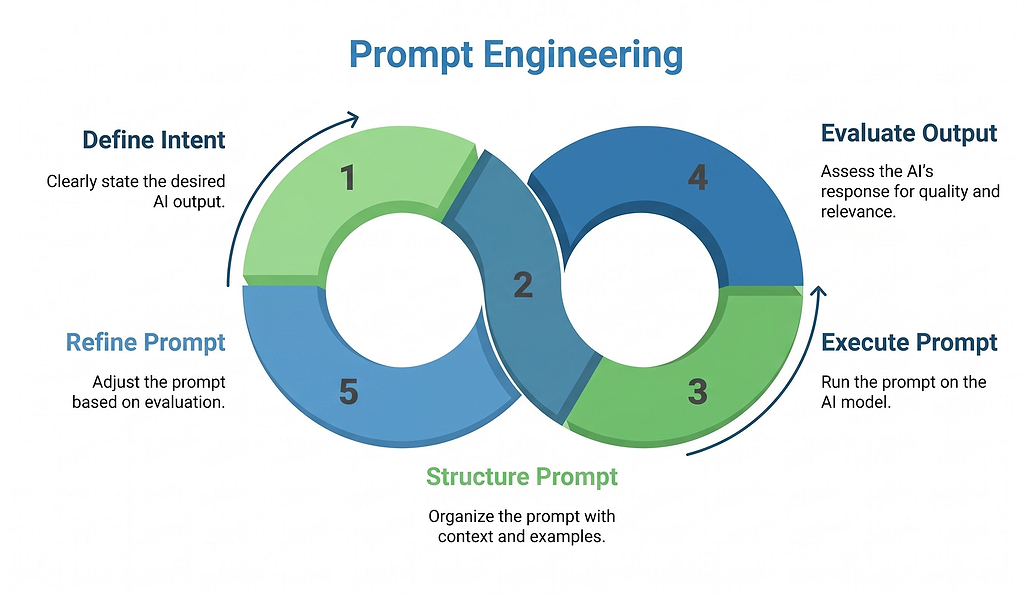
Prompt management is the operational layer that takes over once an instruction exists. It stores the prompt as a versioned resource, tests it, promotes it, and rolls it back on failure. Prompt engineering is the craft of writing and refining that instruction to get better model outputs. This is the LLM prompt management layer that sits inside large language model operations (LLMOps), the LLM-facing side of machine learning operations (MLOps).
In a November 2025 Theory Ventures survey of 413 senior technical builders, 52% manage prompts as code checked into a repository. But Git does not enforce recording the model version or decoding parameters that teams used to test a prompt. When teams load prompts only through application releases, Git-based changes follow the code deployment cycle unless separate configuration delivery provides a runtime update path.
Why Do Unmanaged Prompts Become a Production Risk?
Unmanaged prompts fail in documented ways. Incident reports and regulations document the risk, while Amplify Partners’ researchers reported how widely teams face it.
- Prompt drift: The same prompt produces different outputs as the model behind it changes. GPT-4’s directly executable code generation fell from 52.0% to 10.0% between its March and June 2023 versions.
- Regression risk: A verbosity instruction added to the Claude Code system prompt passed Anthropic’s internal eval suite. Anthropic’s broader evaluation team measured a 3% coding-quality drop, and Anthropic reverted four days later.
- Compliance gaps: EU AI Act Article 12 requires automatic event logging over the lifetime of a high-risk AI system, with at least six months of retention under Articles 19(1) and 26(6). The text names input data rather than prompts, so prompt logging is an interpretation teams must make.
- Security exposure: xAI attributed Grok’s May 2025 “white genocide” outputs to “an unauthorized modification” of the system prompt that bypassed review, Ars Technica reported. Prompt injection is OWASP LLM01:2026 in the GenAI LLM Top 10.
- Collaboration breakdown: Amplify Partners’ 2025 AI Engineering Report found 31% of teams lack a structured tool for managing prompts and 70% update prompts at least monthly.
What are the Core Capabilities of a Prompt Management System?
A prompt registry adds controls a text file in a repo cannot enforce.
Prompt Versioning and Change History
Many prompt registries create an immutable version on each save. The registry identifies each version with a commit hash or integer. With prompt versioning, you roll back by repointing a label.
Prompt Templates and Variable Interpolation
A prompt template separates the fixed instruction from {{variable}} placeholders. The application fills them at runtime with user input or context from retrieval. You version the template so the reviewed instruction stays fixed while runtime inputs vary.
Environment Promotion
Deployment labels such as staging and production point at specific versions; reassigning a label ships an update without a code deploy and takes effect at runtime. One version can hold both labels at once.
Testing and Evaluation
Before promoting a prompt, teams should run each version against an evaluation dataset. To establish a baseline, Anthropic recommends testing against 20 to 50 simple tasks drawn from real-world failures. This practice transforms prompt optimization into a measured, objective comparison. Teams can use side-by-side playground iteration before a commit, while pairwise evaluators score versions on the same inputs.
Access Control and Approval Workflows
Role-based permissions allow non-engineering contributors—such as domain experts, product managers, and support leads—to safely edit drafts in a playground environment without touching application code. A clear split between “draft” and “published” states ensures that the live production version remains fixed during this iteration. Once a draft is ready, side-by-side diffing makes a non-engineer’s wording changes just as reviewable as a standard code diff.
To enforce a strict separation of duties, teams should assign prompt authoring and production promotion to different individuals. By disabling self-approval and requiring a designated release owner to move the production tag, organizations establish a rigorous review gate between drafted prompts and live environments. Notably, a strict review gate on this tag is precisely the control that the Grok incident lacked.
Observability and Monitoring
LLM observability ties each production trace to the prompt version that produced it. It also records output distribution and operational performance, including token cost and latency, so operators can trace a quality drop to a specific change.
CI/CD Integration
Prompts move through the same continuous integration and continuous delivery (CI/CD) pipeline as the application. At runtime, the application retrieves a prompt through a registry SDK or REST call. The call resolves a version number or commit hash. It can also resolve an environment label. For example, LangSmith uses client.pull_prompt("joke-generator:production"). Langfuse uses langfuse.get_prompt("movie-critic", label="staging"). PromptLayer uses a POST /prompt-templates/{identifier} call with an optional version or label parameter.
- Eval gate: An eval job fails the build and blocks the merge below a set pass-rate threshold. Tools enforce this differently: promptfoo uses
fail-on-threshold(0–100%) and posts a before/after comparison on the pull request; Langfuse raises aRegressionErrorwhen evaluation results fall below the configured thresholds; DeepEval callsassert_test()under pytest and raises below threshold. - Promotion: After the gate passes, a pipeline step reassigns the environment label, for example, moving a prompt from
stagingtoproduction, without changing the artifact. - Immutability: Some registries enforce immutability of released versions; editing a published version triggers a pipeline failure, as GitLab AI Gateway does for prompts that define a stable version.
Prompt Management Tools and How to Choose One
No analyst firm or standards body publishes a ranking of prompt management tools. Teams should choose a tool by evaluating four axes: version identity (is each saved prompt uniquely addressable?), environment promotion and rollback (can a version move through development and staging before production and be reversed?), trace-to-version lineage (can operators tie a logged inference to the exact prompt that produced it?), and programmatic access. The last axis includes SDK and API support. It also covers CI integration.
Tools fall into two broad categories:
- Specialized LLMOps registries include LangSmith Prompt Hub, Langfuse, PromptLayer, W&B Weave, Braintrust, and Arize Phoenix.
- Broader platform services include the ML-platform registry MLflow Prompt Registry (≥2.21.0), along with cloud-provider services such as AWS Bedrock Prompt Management, Google Vertex AI prompt management, and GitLab AI Gateway.
Key differentiators worth checking: MLflow and W&B both implement promotion and rollback by reassigning a mutable alias. There is no separate rollback API. LangSmith reserves “staging” and “production” as UI-managed environment tags; the SDK did not support programmatic assignment of those tags after push_prompt as of November 2025. PromptLayer’s Release Labels support gradual rollout and user segmentation. Two tools have changed direction: OpenAI now recommends storing production prompts in application code, and OpenAI will shut down its /v1/prompts API on November 30, 2026; Microsoft no longer recommends Prompt Flow for new development.
Prompt Management and the AI Software Supply Chain
A prompt is a software artifact and needs the controls a container image gets. The OWASP Top 10 for Agentic Applications 2026 tells teams to sign and attest prompts and to pin “prompts, tools, and configs” by content hash and commit ID. Neither Software Package Data Exchange (SPDX) nor CycloneDX defines a prompt component type, so prompt provenance is yours to build.
- Security scanning: A secrets scan before promotion catches credentials that leak with system prompts. A large-scale measurement of 1,200 publicly accessible LLM applications found that 1.6% of leaked prompts exposed access secrets such as API keys. OWASP also names “poisoned prompt templates loaded remotely” as a supply chain threat.
- Approval evidence: Auditors use version IDs and timestamps to identify what changed. They use reviewer identities and evaluation results to determine why, and promotion history to determine when.
- Governance reporting: Prompt governance feeds LLM security posture and AI governance reporting.
- Supply chain alignment: Models and Model Context Protocol (MCP) servers already move through the agentic supply chain behind the approval controls of an MCP registry. Agent skills use the same controls, and prompts need the same gate.
Best Practices for Prompt Management at Scale
At scale, teams need consistent controls for prompt storage and promotion, along with evaluation and access.
- Store prompts in a registry with deployment labels, outside the codebase.
- Treat every prompt change as a deployment: complete review and an eval run before staged promotion.
- Version prompt text and model identifier together. Include decoding parameters in the same version.
- Apply least privilege to production tags; alert on per-version drift.
- Scan for secrets and personally identifiable information (PII) before promotion. Include injection patterns in the scan.
Common Questions About Prompt Management
Teams should evaluate a registry by how it versions prompts, controls promotion, records lineage, and integrates with delivery pipelines.
What Is Prompt Management and Why Does It Matter for AI Applications?
Prompt management covers versioning, testing, deployment, and monitoring. Without it, no one can prove which instructions the application sent to the model.
What Is the Difference Between Prompt Management and Prompt Engineering?
Prompt engineering covers phrasing, examples, and output format. Prompt management adds access control, evaluation, deployment, versioning, and rollback.
What Are Common Strategies for Organizing and Storing Prompts?
Teams keep prompts in Git beside application code or in a dedicated registry. A registry adds deployment labels and audit trails. It can also support A/B testing and role-based access control; Git does not.
What Are the Three Types of Prompts in an LLM API?
Most LLM APIs distinguish a system role from the user and assistant roles. In practice, these message roles are the three prompt types. The system prompt sets fixed instructions and constraints. The user prompt carries the request. The assistant prompt, which contains prior model turns or seeded examples, shapes continuation. Teams centrally version and govern the system prompt. It ships independently of user input and controls behavior for every request.
What Are the 5 P’s of Effective Prompting?
The five P’s is an informal authoring mnemonic: persona, purpose, precision, provided context, and polish through iteration. ISO/IEC 22989 defines “prompt,” while no framework or standards body defines the mnemonic. Whichever authoring framework produces the text, prompt management governs the result by versioning it, testing it against an evaluation dataset, and gating its promotion.
How Does Prompt Management Relate to Prompt Injection Security?
Access control and audit trails shrink the blast radius by enabling a return to the last approved version.
Can Prompt Management Integrate With Existing CI/CD Pipelines?
Yes. Prompt management systems promote prompts through application delivery pipelines, though programmatic support varies by tool.
Does Fetching Prompts From a Remote Registry Add Latency or a Point of Failure?
Client-side caching keeps registry requests off the hot path. Registry SDKs cache prompts client-side, so the client-side cache serves most requests locally. MLflow caches version-pinned loads with an infinite time-to-live (TTL, which specifies how long the client considers a cached value valid before attempting a refresh) and alias-based loads with a 60-second TTL, both configurable. Langfuse defaults to a 60-second client-side cache TTL, configurable to 0. LangSmith enables caching by default in recent Python and TypeScript clients.
The trade-off is direct: a longer TTL removes the network call but delays how quickly a promotion or rollback reaches running instances. Pinning a version identifier rather than a mutable label removes the runtime lookup entirely, at the cost of requiring a deploy to change the prompt. When clients cannot reach the registry, they serve the last cached version.
What Does a Prompt Lifecycle Look Like in Production?
A contributor drafts and a reviewer approves. An engineer commits the prompt to a versioned registry. The team evaluates it, promotes it through staging and production, and rolls back on degradation.
How JFrog Helps Manage and Govern Prompts
Prompt management gives teams version history, evaluation records, access controls, and a rollback path for the instructions that shape LLM behavior. The JFrog Software Supply Chain Platform serves as a single system of record for software and AI artifacts from developer to runtime. It consolidates the models and software components that prompt-driven applications depend on under shared artifact controls.
- JFrog ML applies governance through versioning and scanning to every model teams train or pull from Hugging Face.
- JFrog AI Catalog adds discovery and governance for models and MCP servers. Agent skills receive the same controls, and shadow AI detection is included.
- JFrog Artifactory consolidates model files and container images in one system of record without requiring teams to replace their CI/CD tooling. It consolidates packages there as well.
- JFrog Advanced Security uses contextual analysis to determine whether a vulnerability in the Common Vulnerabilities and Exposures (CVE) system is exploitable in a specific codebase. It also detects secrets. It provides static application security testing plus infrastructure-as-code scanning.
See how the JFrog AI Catalog governs models and the components agents use, including MCP servers and agent skills, or start a free trial to centralize approved AI and software artifacts in one system of record.