Claude
  Cursor
  Codex
Codex  Hugging Face
  NVIDIA
  Visual Studio Code
  Devin
Devin  Kiro
Kiro  Open Code
  NanoClaw
 Docker
  npm
npm  PyPy
PyPy  Wiz
Wiz 
 金融サービス
  ゲーム・エンタメ
  公共部門
公共部門  自動車
自動車  テクノロジー
  ヘルスケア
ヘルスケア 


よくあるご質問
JFrogの評価およびGartner® Magic Quadrant™(ソフトウェアサプライチェーンセキュリティ部門)について知っておくべきすべての情報。


JFrogは、エージェントが利用するものを保護し、開発・デプロイの方法を制御します。AIモデル、エージェントスキル、プラグイン、MCPサーバー、パッケージ、AI生成アーティファクトまで、すべてを信頼できる唯一の情報源で一元管理します。
信頼できるAIエージェント。
それを実現するのがAgentSecOpsです。
JFrog Platformは、業界を問わず、エージェント型ソフトウェアサプライチェーンの重要な課題を解決します。
ソフトウェアサプライチェーンのセキュリティ
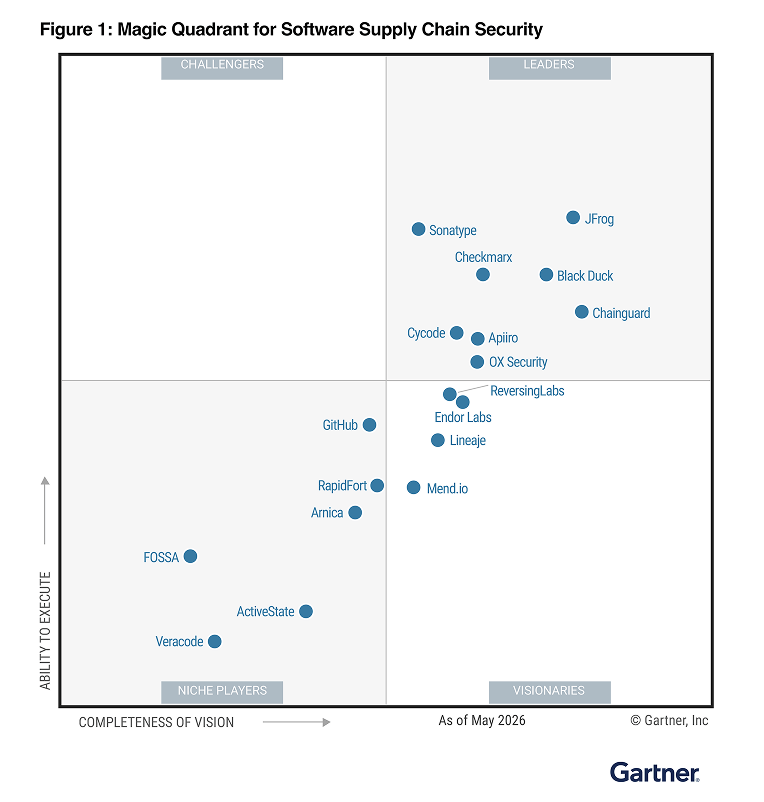
Gartner®は今回初めて、ソフトウェアサプライチェーンセキュリティを独自のMagic Quadrant™カテゴリーとして定義しました。
最初のレポートでJFrogはリーダーに選出されました。
あらゆるパッケージ、バイナリ、依存関係に対する詳細な可視性 — あらゆる言語、ツール、SDLCのステージを網羅

CVE分析、シークレット検出、悪意のあるパッケージの特定 — 実際に悪用可能なものを判断するためのコンテキストを提供
後付けではなく、パイプラインに組み込まれたセキュリティ。 自動修復機能で開発スピードに合わせて修正

脆弱性の追跡に何日も費やすことはなくなりました。JFrogのおかげで、数日ではなく数時間以内に対応できる可視性と自動化が実現しました。

JFrog Platformを選んだのは、リポジトリとしてだけでなく、完全なプラットフォームとして捉えているからです。 JFrogは、Artifactoryに加えて、包括的なエンドツーエンドのセキュリティソリューションを提供しています。
私はAppSecの基本原則である、防御、検知、修復を遵守しています。 JFrogの提供する製品・ソリューションを見て、必要としていた要件はすべて満たされていると感じました。
開発チームとセキュリティチームは、脆弱性を精査し、優先順位を付ける作業に多くの時間を費やしていました。JFrog Xrayのコンテキスト分析と適用可能性スキャン機能により、すぐに対応すべき脆弱性を見極め、解決に向けた作業に時間を集中できるようになりました。

JFrogの評価およびGartner® Magic Quadrant™(ソフトウェアサプライチェーンセキュリティ部門)について知っておくべきすべての情報。
Gartner® Magic Quadrant™ for Software Supply Chain Securityは、独立系アナリストによる調査レポートであり、対象となるベンダーを「実行能力」と「ビジョンの完全性」という2つの側面から評価します。 Gartnerが定義した評価基準、必須機能とオプション機能に基づき、各ベンダーがソフトウェアサプライチェーンのセキュリティライフサイクル全体にどのように取り組んでいるかが網羅されています。
JFrogのフォームを送信すると、PDFレポート全文をダウンロードするためのリンクが届きます。 これには、Gartnerのメソドロジー、ベンダー分析、市場の定義、および組織のニーズに基づいてソリューションを評価・選択する方法に関するガイダンスが含まれています。
Gartnerは、現在のビジョンを確実に実行し、将来に向けて優れた位置付けにあるベンダーを「リーダー」クアドラントに配置しています。
本カテゴリーの初年度に「リーダー」クアドラントに位置付けられたことは、JFrogが市場の需要を満たす成熟した製品を提供しており、
要件が進化する中で市場での地位を維持するために必要なビジョンを実証してきた
とGartnerに評価されたことを意味します。 「リーダー」の証は、市場をリードし、その全体的な方向性に影響を与えられるレベルまで、自社の製品・サービスに注力し投資していることです。 その結果、新しい市場の製品がどのように進化する可能性があるかを理解しようとする際、リーダー企業が注目すべきベンダーとなる可能性があります。
SSCSのリーダーは、サードパーティ製ソフトウェアのリスク保護に向けた革新的な手法を採用する傾向にあります。 同社は完全なSBOMライフサイクル管理製品、完全な
組織のエコシステム内における調査結果の文脈化、SSCSの拡張を可能にする開発者向けの制御機能を提供します。 ソフトウェアサプライチェーンセキュリティ(SSCS)市場のリーダー企業も、AIサプライチェーンセキュリティに多額の投資を行っています。
リーダーは通常、幅広い市場要件をサポートすることで、広範な市場のオーディエンスに対応します。 しかし、それらは特定の業種市場やその他のより専門的なセグメントのニーズを満たせない可能性があります。
Software Supply Chain Security Magic Quadrant™におけるGartnerの評価基準は、両軸にわたるいくつかの側面を網羅しています。 「実行能力」においては、製品やサービスの機能と品質、ベンダーの全体的な存続可能性、販売実行力と価格設定、市場への対応力、マーケティング実行力、顧客体験、そして運用面が評価されます。 「ビジョンの完全性」においては、市場理解、マーケティング戦略、販売戦略、製品戦略、ビジネスモデル、業種/業界戦略、イノベーション、および地理的戦略が評価されます。
詳細な方法論についてはレポートに記載されています。 Gartnerが使用する基準は、この分野のベンダーを評価する際に使用する基準と同じである可能性があるため、全文を読むことを推奨します。
JFrogは、開発者がプロンプトを入力した瞬間から、オープンソースの依存関係の取得、ビルド、テスト、パッケージング、配布、そして本番環境へのデプロイに至るまで、ソフトウェアサプライチェーン全体にわたるエンドツーエンドの可視性と制御を提供します。
主な機能には以下が含まれます: JFrog Curationは、悪意のあるパッケージ、ライセンス違反、高リスクの依存関係が環境に侵入するのをブロックします。 JFrog Artifactoryは、あらゆる言語およびパッケージタイプにわたるすべてのバイナリのユニバーサルアーティファクトリポジトリであり、信頼できる唯一の情報源です。 JFrog Xrayは、CVEおよびライセンス・コンプライアンスのスキャン用です。 JFrog Advanced Security(JAS)は、SDLC全体にわたって詳細なコンテキスト分析、シークレット検出、IaCの構成ミスのスキャン、SASTを追加します。 ランタイムセキュリティは、本番環境で発見された脅威を検出し、対応します。
すべてが単一のプラットフォームを介して流れるため、セキュリティチームは、開発者が作業方法を変更することなく、完全な部品表(SBOM)、追跡可能な成果物の系譜、自動化されたポリシー適用を利用できます。
はい、当てはまります。 貴社は実際には想像以上に進んでいる可能性があります。 ArtifactoryはJFrogプラットフォームの基盤です。 現在これを使用しているのであれば、SDLC全体にわたって信頼性レイヤーを提供するために必要な唯一の情報源が既に存在していることになります。
Gartnerによる評価は、当社のJFrogソフトウェアサプライチェーンに基づいています
JFrog Curation(環境への侵入前に悪意のあるパッケージや高リスクの依存関係をプロアクティブにブロック)、JFrog Xray(セキュリティスキャンおよびCVE分析)、JFrog Advanced Security(シークレット検出、コンテキスト到達可能性分析、SAST)、JFrog Runtime Securityを含むプラットフォーム。 これらの機能をまだすべて活用されていない場合は、既存のデプロイメントでどのようにギャップを解消できるか、アカウントチームがご案内します。アーキテクチャを再設計する必要はありません。
JFrogの視点から見ると、当社のアプローチにはいくつかの特徴があります。まず、単機能ツールの継ぎ足し(ポイントソリューション)ではなく、単一のプラットフォームでバイナリのライフサイクル全体をカバーしている点(60種類以上のテクノロジータイプに対応)です。次に、JFrog Curationは、悪意のあるパッケージ、ライセンス違反、高リスクの依存関係を取り込み時にプロアクティブにブロックし、開発環境に侵入する前に脅威を防ぎます。これは、問題が発生した後にスキャンを行う手法とは根本的に異なるセキュリティアプローチです。また、当社のセキュリティスキャンはコンテキストを考慮した到達可能性分析を提供し、誤検知率を劇的に低減します。さらに、6,600社以上のエンタープライズ顧客との15年以上にわたる本番環境での導入実績により、当プラットフォームは他社ベンダーが追随困難な規模でストレステストが行われています。
レポート全文には、各ベンダーの強みと注意点に関するGartnerの独立した評価が記載されており、比較検討を始める上で最も客観的な資料となります。 ベンダーによる自己説明に頼るのではなく、該当セクションを注意深く読むことを推奨します。
出典:Gartner, Magic Quadrant for Software Supply Chain Security, Aaron Lord, Johnny Walters, Jason Gross, 2026年6月17日
GartnerおよびMagic QuadrantはGartner, Inc.またはその関連会社の商標です。
Gartnerは、同社の調査資料に掲載されたいかなる企業、ベンダー、製品、サービスも推奨するものではなく、また、テクノロジーユーザーに対し、最高評価やその他の指定を受けたベンダーのみを選択するよう助言するものでもありません。 Gartnerの出版物は、Gartnerのビジネスおよびテクノロジーインサイト組織の見解に基づいており、事実の表明として解釈されるべきではありません。 Gartnerは、本出版物に関して、商品性または特定目的への適合性に関する保証を含む、明示または黙示を問わず、すべての保証を否認します。