Welcome to the JFrog Blog

All Blogs

You Can’t Trust What You Can’t Trace

You Can’t Trust What You Can’t Trace

Picture this: Your security team finishes an AI vendor evaluation. The offering looks ironclad, with content filtering, output guardrails, and a stellar red-teaming report. Everyone leaves the meeting satisfied, and another governance box is checked. Six months later, a production incident hits. An AI agent, powered by a model your team "vetted," starts executing unauthorized…

Recap: Women in DevSecOps Fireside Chat — Leveraging AI in Software Delivery

Recap: Women in DevSecOps Fireside Chat — Leveraging AI in Software Delivery

In celebration of International Women's Month and the 2026 theme #GiveToGain, JFrog hosted a virtual fireside chat on March 19, 2026: Women in DevSecOps: Leveraging AI in the Software Delivery Lifecycle. Moderated by Shubha Gururaja Rao, Director of Solution Engineering at JFrog, the panel brought together two trailblazing technical leaders — Christine Tran, Head of…
AzureML and JFrog: Securing the Model Lifecycle

AzureML and JFrog: Securing the Model Lifecycle

Azure Machine Learning (AzureML) is a powerhouse for model experimentation and high-scale compute. However, for most organizations, the challenge isn’t building models; it’s the complex journey from a notebook to a secure, governed, and production-ready application. When models and dependencies reside in unmanaged silos, you lose the traceability required for production. This fragmentation creates Shadow…
Navigating DORA Compliance: Software Development Requirements for Financial Services Companies

Navigating DORA Compliance: Software Development Requirements for Financial Services Companies

Note: This blog was originally published in July 2024 and updated on an annual basis. It was most recently updated in April 2026. Regulatory compliance is a common and critical part of today's rapidly evolving financial services landscape. One new regulation that EU financial institutions must adhere to is the Digital Operational Resilience Act (DORA),…
AI Models Won’t Pick Sides in the Security War. Governance and Policy Will.

AI Models Won’t Pick Sides in the Security War. Governance and Policy Will.

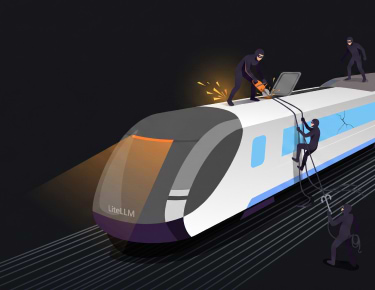
Two significant software supply chain cybersecurity attacks, seven days apart, with one hundred and eighty million weekly downloads between them. The chaos from development teams to the boardroom is real. And the pace is only going to get faster. Much, much faster... On March 24, the LiteLLM Python package, the proxy through which millions of…
Governance That Ships: Embedding Policy as Code Into Your System of Record

Governance That Ships: Embedding Policy as Code Into Your System of Record

Proving compliance is a necessity, but in a world of tightening regulations, the path to compliance is currently paved with spreadsheets, screenshots, and manual attestations. We call this the "Audit Tax", the millions of dollars and thousands of people hours spent not just integrating security, but on proving you are handling security. With the advent…
Accelerating Secure Software Delivery in Southeast Asia: Why the “Surge of Binaries” Demands a Unified Strategy

Accelerating Secure Software Delivery in Southeast Asia: Why the “Surge of Binaries” Demands a Unified Strategy

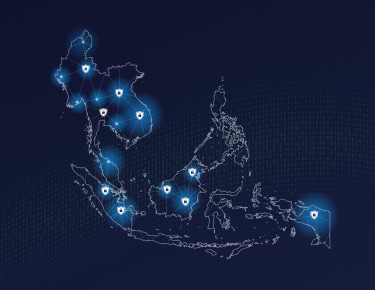
For years, the conversation around digital transformation in Southeast Asia focused on "getting to the cloud." Today, that conversation has shifted. Our region is no longer just adopting the cloud; we are leapfrogging traditional development cycles by integrating AI and cloud-native architectures at a staggering pace. However, this acceleration has created a byproduct that many…
Stop Policies From Breaking Your Builds

Stop Policies From Breaking Your Builds

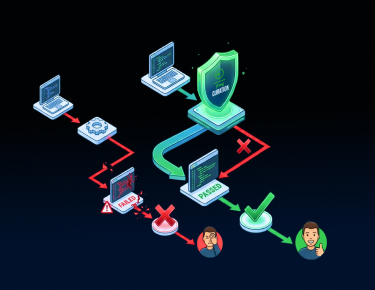
Security policies exist to protect your software supply chain. So why do they keep breaking your builds? This is the unspoken frustration inside most DevOps and security teams today. Supply chain attacks drove 30% of external breaches in 2025 . So your security team did the right thing. They added policies to flag packages that…