Welcome to the JFrog Blog

All Blogs

Your Artifactory is fine. Your Linux kernel hosting it might not be.

Your Artifactory is fine. Your Linux kernel hosting it might not be.

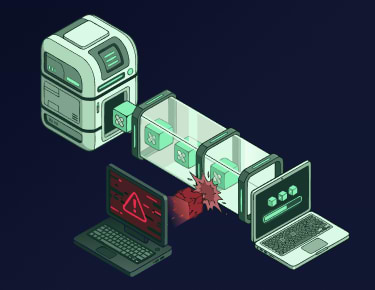
Summary As we've written, AI is shrinking the time between “a fix is public” and “someone has a working exploit” to near-zero. JFrog products are not affected by Linux kernel CVE-2026-98432. Artifactory, Xray, and the rest of the JFrog Platform do not contain this flaw, as it lives in the Linux kernel itself. We are…
“Are We Exposed?” What CISOs Need to Know About Their Software Risk

“Are We Exposed?” What CISOs Need to Know About Their Software Risk

Recent events have once again highlighted the need to quickly answer the question, “Are we exposed?” We now face threats to businesses and governments from vulnerabilities and compromises in three fundamental components used in software development: Curl, PHP, and LiteLLM. Curl When it comes to Curl and its underlying transfer library libcurl, the threat can…
The Impact of AI on CVEs: Industry Challenges

The Impact of AI on CVEs: Industry Challenges

Integrating artificial intelligence into cybersecurity has fundamentally changed vulnerability research - and not necessarily for the better. For decades, discovering and verifying Common Vulnerabilities and Exposures (CVEs) required deep technical expertise, creating a disciplined process that kept disclosure volume relatively manageable. Today, Generative AI has obliterated that barrier to entry. While AI empowers seasoned security…
Scanning AI Assets: Catching What SCA and SAST Might Miss

Scanning AI Assets: Catching What SCA and SAST Might Miss

Your standard application security tools are designed to protect your software pipeline by checking third-party components for known vulnerabilities (via SCA), analyzing source code for security flaws (via SAST), and scanning for accidentally exposed credentials (using secret scanners). But if a developer drops a SKILL.md file into their coding agent, installs a plugin from a…
Shadow AI Detection Now Extends to Developer Workstations

Shadow AI Detection Now Extends to Developer Workstations

ZIP files shared between co-workers containing new agent skills, locally-developed MCP servers passed between developers, and locally stored newly-minted agents are all seemingly harmless files that are commonly used in corporate software development environments. Unfortunately, far from being harmless, these locally stored files can contain AI assets that were never detected or registered as an…
Anthropic’s Free OSS Scanner: What It Means For Your Team

Anthropic’s Free OSS Scanner: What It Means For Your Team

On October 8, 2026, Anthropic announced OSS Scanner, a free, opt-in vulnerability scanning service for eligible open-source projects. The OSS Scanner is powered by their most capable models, including Claude Mythos. It scans codebases, identifies vulnerabilities, proposes patches, and sends reports directly to maintainers. As you read this, it has already identified real, high-severity issues…
Lessons from the SolarWinds Breach: A Discussion With CISO Tim Brown

Lessons from the SolarWinds Breach: A Discussion With CISO Tim Brown

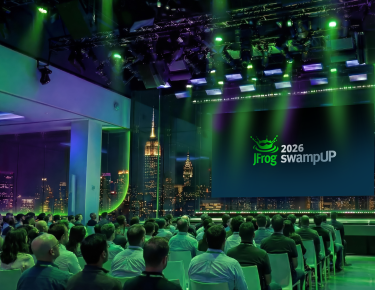
At JFrog's swampUP 2026 conference in New York, security leaders gathered to tackle the rapidly evolving landscape of software supply chain security and AI-driven development. In this exclusive sit-down interview from the event, former SolarWinds CISO TIM (now CISO in Residence at Team8) sits with JFrog CISO Paul Davis and reflects on the historic 2020…
The Year the Vulnerability Backlog Changed Shape

The Year the Vulnerability Backlog Changed Shape

As we enter the AI era, few among us have found themselves so entrenched in the throes of the shifting landscape as CISOs. With the threat landscape shifting, they are up against increasing rates of vulnerabilities and exploits alongside rapidly scaling demands for ever more secure environments. As CISOs, with our role as the protectors…
Governing the Agentic SDLC Through Continuous Policy Enforcement

Governing the Agentic SDLC Through Continuous Policy Enforcement

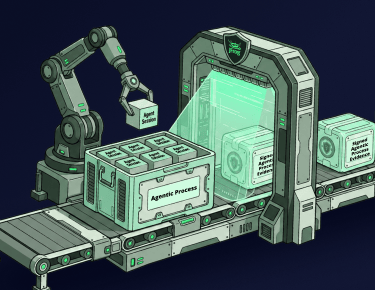
The way software gets built has changed faster than the standards that govern it. AI agents now create pull requests, select dependencies, refactor codebases, interpret test failures, and execute infrastructure changes across the entire Software Development Life Cycle (SDLC). AI agents are autonomous team members, but unlike human engineers, they are ephemeral: their reasoning, decisions,…
The New Rules of Patching: When a Fix Becomes a Blueprint for Attackers

The New Rules of Patching: When a Fix Becomes a Blueprint for Attackers

TL;DR: Frontier AI has collapsed the vulnerability exploit window from weeks to mere hours. Attackers now use advanced AI models to reverse-engineer published fixes and generate working exploits faster than human security teams can deploy updates. In the AI era, publishing a patch creates a blueprint for attackers. Surviving this threat requires vendors to tier sensitive…