Welcome to the JFrog Blog

All Blogs

The Vulnerability Playbook Is Broken: A CISO’s Cheat Sheet To AI-Era Cybersecurity

The Vulnerability Playbook Is Broken: A CISO’s Cheat Sheet To AI-Era Cybersecurity

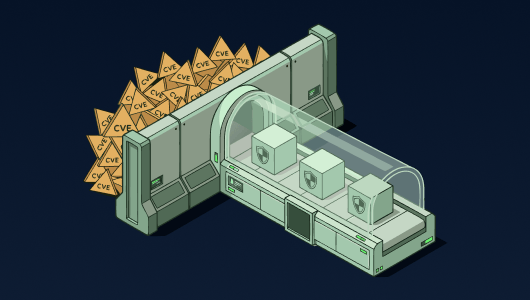
Vulnerability remediation has been following the same outdated playbook: A scanner finds a vulnerable component, a ticket gets filed, a developer gets assigned. Then a pull request gets reviewed, and a pipeline runs. Then weeks or months later, the vulnerability is closed. That playbook assumed one thing: We have time. We no longer do. Exploitation…

The Race to Remediation: Black October Showed that Threat Intelligence Isn’t Enough

The Race to Remediation: Black October Showed that Threat Intelligence Isn’t Enough

In a single week in October 2026, security teams faced one serious security incident after another. A certificate authority failed, critical flaws in PHP were disclosed after a broken embargo, a popular open-source AI gateway was compromised, and developer platforms reported thefts of customer secrets. Industry insiders started calling the seemingly steady drumbeat of attacks…
bREACHYing the Perimeter: How One HTTP Request can Hijack your AI Robot

bREACHYing the Perimeter: How One HTTP Request can Hijack your AI Robot

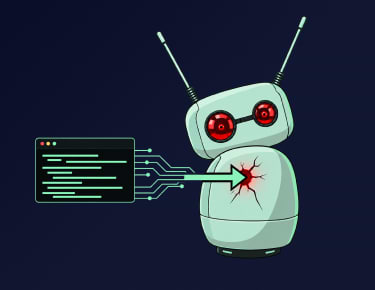
Software supply chain attacks are on the rise, and naturally taking the headlines. But with the rise of localized models and common software embedded into smart “things”, risks may even be hidden in plain sight - or, in some cases, quite literally watching you. Vulnerabilities and malicious packages may extend risks to the unlikeliest of…
Your Artifactory is fine. Your Linux kernel hosting it might not be.

Your Artifactory is fine. Your Linux kernel hosting it might not be.

Summary As we've written, AI is shrinking the time between “a fix is public” and “someone has a working exploit” to near-zero. JFrog products are not affected by Linux kernel CVE-2026-98432. Artifactory, Xray, and the rest of the JFrog Platform do not contain this flaw, as it lives in the Linux kernel itself. We are…
“Are We Exposed?” What CISOs Need to Know About Their Software Risk

“Are We Exposed?” What CISOs Need to Know About Their Software Risk

Recent events have once again highlighted the need to quickly answer the question, “Are we exposed?” We now face threats to businesses and governments from vulnerabilities and compromises in three fundamental components used in software development: Curl, PHP, and LiteLLM. Curl When it comes to Curl and its underlying transfer library libcurl, the threat can…
The Impact of AI on CVEs: INDUSTRY CHALLENGES

The Impact of AI on CVEs: INDUSTRY CHALLENGES

Integrating artificial intelligence into cybersecurity has fundamentally changed vulnerability research - and not necessarily for the better. For decades, discovering and verifying Common Vulnerabilities and Exposures (CVEs) required deep technical expertise, creating a disciplined process that kept disclosure volume relatively manageable. Today, Generative AI has obliterated that barrier to entry. While AI empowers seasoned security…
Scanning AI Assets: Catching What SCA and SAST Might Miss

Scanning AI Assets: Catching What SCA and SAST Might Miss

Your standard application security tools are designed to protect your software pipeline by checking third-party components for known vulnerabilities (via SCA), analyzing source code for security flaws (via SAST), and scanning for accidentally exposed credentials (using secret scanners). But if a developer drops a SKILL.md file into their coding agent, installs a plugin from a…
Shadow AI Detection Now Extends to Developer Workstations

Shadow AI Detection Now Extends to Developer Workstations

ZIP files shared between co-workers containing new agent skills, locally-developed MCP servers passed between developers, and locally stored newly-minted agents are all seemingly harmless files that are commonly used in corporate software development environments. Unfortunately, far from being harmless, these locally stored files can contain AI assets that were never detected or registered as an…
Anthropic’s Free OSS Scanner: What It Means For Your Team

Anthropic’s Free OSS Scanner: What It Means For Your Team

On October 8, 2026, Anthropic announced OSS Scanner, a free, opt-in vulnerability scanning service for eligible open-source projects. The OSS Scanner is powered by their most capable models, including Claude Mythos. It scans codebases, identifies vulnerabilities, proposes patches, and sends reports directly to maintainers. As you read this, it has already identified real, high-severity issues…
These blogs are for general informational purposes only and are not legal, compliance, or security advice. They are provided “as is,” and may not be updated, and any potential statements about future products or features are not commitments. To the extent permitted by law, JFrog disclaims liability for any reliance on them.