Claude
  Cursor
  Codex
Codex  Hugging Face
  NVIDIA
  Visual Studio Code
  Devin
Devin  Kiro
Kiro  Open Code
  NanoClaw
 Docker
  npm
npm  PyPy
PyPy  Wiz
Wiz 
 Financial Services
  Gaming
  Public Sector
  Automotive
  Technology
  Healthcare


2026: Trust Is the Currency, Platforms Are the Standard, and Vendors Must Justify Their Seat at the Table
Why security-first platforms, outcome-based services and value-driven pricing will define software delivery in an increasingly complex AI-world

Listen to a NotebookLM podcast version of the blog:
First things first
Those who know me know that I don’t publish predictions just because the calendar flips, and for a few years, I’ve avoided posting blogs, forecasts, and year-end summaries. But 2025 was different. Not because of what changed, but because of how fast it changed. Not simply due to AI-driven innovation, but because of the disruption it unleashed across the entire software landscape.
If 2025 was about rapid evolution, 2026 will be about operationalization and execution. Software companies that fail to embrace this surge won’t merely fall behind; they’ll disappear!
Let’s unpack this…
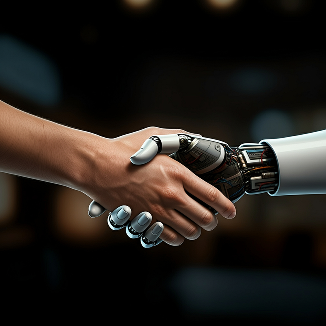
No Security. No Trust. No Control. No AI!
The implications are already clear: in 2026, trust is the crucial, primary currency in a rapidly-evolving, AI-driven software industry. Security will no longer be a feature, an add-on, a “scanner,” or a line item. It will be the foundation, built on a System of Record that centralizes an organization’s most critical assets.
For the past 15 years, much of the focus around application security and open source has been on scanning source code (SCA and SAST). Today, as developers leverage AI-assisted coding tools to generate millions of lines of code at unprecedented speed, traditional scanners have become noise makers – like multiple alarm systems clanging at once for everything, even when there’s no real threat in your home.
In 2026, Vibe Coding will evolve into Vibe Engineering: developers will have full ownership of the security of the code they’re responsible for, whether written by humans or AI agents. With the tsunami of code being compiled and binaries being created, efficiency and precision will be critical.
There will be no place for noisy scanners that only analyze source code without delivering real security or value as you protect your Software Supply Chain and SDLC.
But, when security and efficiency converge, trust becomes the currency that drives adoption, scale, and the business. CIOs and CISOs already know this: without trust, there is no adoption, no scale, and a risky, threatened business.

Point Solutions Are Dead. Long Live Platforms.
Before you read on, ask yourself: how many security tools does your organization use to protect the SDLC and software supply chain? Most likely, you’re juggling multiple tools. Research shows that in enterprises with over 1,000 developers, there are, on average, five tools all supposedly doing the same thing.
Software supply chain security efforts have created a point solution sprawl over time. This sprawl isn’t just about redundant tools in the new world, but about the accuracy, applicability, and contextualized results.
But with so many “shields” protecting your business, why did they all fail when the Shai-Hulud, npm attack shocked the world at the end of 2025, or when PyPi, MCP, and other software packages faced hacker attempts targeting the software supply chain?
The answer is simple: legacy point solutions simply cannot secure the entire flow. Tools that once scanned source code are not built to protect the full SDLC, where the main assets are software artifacts with multiple dependencies. They lack critical capabilities like preemptive firewalls at the gate before OSS packages enter local repositories (hopefully by now your organization’s System of Record), secrets scanning, shadow AI detection, and contextual or runtime analysis. Point solutions were once “best of breed” picked by developers, but they were never designed to protect the full software delivery lifecycle. And so, they fail again and again, with fired CISOs scrambling to explain how breaches happen, even after incidents like Log4j and SolarWinds taught us lessons a few years back.
The future is different. Companies now need a 360° platform, one that natively enforces OSS and curation policies, secures local repositories as their single source of truth, scans for real threats, and provides full visibility and traceability for fast, automated remediation, which in today’s world, must be agentic and automated.
The result? Nearly all of the point solution companies are for sale. Why? Because their only viable future is to be part of a platform. It’s not about adding new scanners or incremental innovation, a dashboard here or integration there; it’s about a fundamentally different world, with fundamentally different threats. CIOs and CISOs get it: AppSec and DevSecOps teams have started to understand, and the consolidation toward comprehensive, platform-based security solutions is underway.
In a world where humans are amplified by AI, more code is being created than ever before. That code is compiled, and once compiled, it becomes binaries, whether open source or proprietary, public or internal to your organization. If you fail to protect this core asset, the next attack will strike your software supply chain. It’s no longer a question of if, but when.

Everyone Wants to Be the System of Record. Few Are Built to Be One.
AI is powered by data. Models are trained, and agents are activated, all connected to a Single Source of Truth – not only to drive automation and efficiency, but to enforce security, governance, and trust.
This pattern is already well established across the enterprise. When agents want to know anything about your customers, they work against a CRM system of record; they most likely connect to Salesforce. In HR, your system of record is your HRIS, often Oracle. In finance, AI workflows rely on platforms like Intuit, NetSuite, or their peers.
The same logic applies to software development. GitHub is the system of record for source code, while JFrog Artifactory is the system of record for binaries and packaged software from build to production.
But AI has pushed the industry to a new level of clarity. Software organizations are increasingly split into two camps: application providers, many of which will be augmented or replaced by AI, and infrastructure providers, the “picks and shovels” of the modern software gold rush.
Even here, CIOs have demanded consolidation. Platforms emerged over the past few years to reduce fragmentation. Now, those infrastructure platforms are diverging again between those that are fundamental, built around a true System of Record capable of powering and securing AI at scale, and those that are merely collections of integrated tools, lacking the depth, authority, and trust a foundational platform must provide.
In the AI era, not every platform qualifies. Only those with a System of Record at their core can truly power, secure, and govern what comes next.
If you’ve read this far, you’re probably asking which types of vendors will emerge stronger from the profound disruption AI is driving, amid the macroeconomic complexity the world has navigated over the past three years.
Value Delivered Is “the New Contract”
In the AI era, ROI will be measured in outcomes. CIOs will be expected to deliver real, measurable results from trusted AI systems. Research from Forrester already signals that while AI is not yet fully adopted in production, CIOs will be under growing pressure to demonstrate clear ROI by 2026.
At the same time, software organizations must raise the bar on security and governance. Enforcing policies and practicing DevGovOps will be essential to strengthening the software supply chain, balancing compliance, speed, and trust at scale.
This shift fundamentally changes what it means to be a vendor. Those who want to participate in this journey must evolve into true partners, focused on customer outcomes and tangible value – not only delivering tools or services that are renewed as-is.
Vendors will be expected to deliver end-to-end, 360° solutions, not isolated capabilities. Universality, openness, and deep integration with coexisting platforms and open-source ecosystems will become table stakes.
This vendor mindset transformation will reshape the business of software itself. Pricing models and units will change, moving away from abstract subscriptions and licenses toward charging for the real value and volume customers and users (including agents) receive.
These changes run deep. They are DNA-level shifts that demand relentless focus on customer outcomes. History has shown that software companies that imposed new pricing models without aligning to customer value didn’t just lose business, they lost trust and reputation. The evolution ahead will be different: driven by outcomes, transparency, and partnership.
This transformation won’t happen overnight. I expect the change in vendor DNA and business models to unfold through 2030, reshaping even the largest software companies. Just as the cloud consumption model emerged between 2008 and 2012 – redefining how we think about storage and data transfer, the AI era will introduce a more mature alignment between value delivered and value paid for, whether in the cloud or on-premises, allowing users to set their deployment environment to fit their business purpose.
SaaS companies, especially those built on seat-based pricing, will be forced to evolve, not only due to market pressure and technological shifts, but because development teams themselves are changing. According to Gartner, by 2028, the future workforce will be a hybrid of humans and AI agents, and the software business model must evolve to reflect that reality.

Complexity Is Permanent. Responsibility and Agility Decide Who Wins.
You might assume that the next executive order from the White House – or many other global regulatory bodies – on AI regulation or security will be what reshapes your day-to-day reality. But the forces at play are far larger.
Consider China, the world’s second-largest economy, deeply embedded in and, in many cases, controlling critical segments of the global supply chain for chips and raw materials. As robotics and AI accelerate, software becomes the fuel, and it becomes clear that structural, geopolitical, and macroeconomic forces are shaping the future just as much as technology itself…
We will continue to see rapid evolution, not only in how we build, secure, and govern software internally, but in how external economic and geopolitical shifts redefine what is possible and what is required.
Software companies embraced agility years ago, becoming faster and more automated – driving the rise of DevOps and DevSecOps. But the agility demanded now is fundamentally different. What was once reactive has become permanent. Change is no longer episodic; it is constant!
This era calls for a new kind of readiness and leadership: the ability to adapt continuously, act responsibly, and turn disruption into opportunity. Those who can master this level of agility, grounded in trust, governance, and clarity of purpose (focused on their “why”), will not just survive what comes next in 2026 and beyond. They will shape it!
And again… while AI touches every part of our world, the real differentiator remains your company’s DNA and culture, what we at JFrog call the Codex (our system of values) and what we believe helps us better support our customers throughout these changes.
It defines who you are, how ready you are to protect your customers and community, how agile and humble you remain, and how you innovate – not just in technology, but as a generation living through the next “Industrial Revolution.”
There is much to anticipate in 2026 and beyond: challenges to embrace, and opportunities that surge forward, here to be seized. There are a lot of great reasons to believe that a Happy New Year is coming…
May the FROG be with you – as we shape this new era together!