Claude
  Cursor
  Codex
Codex  Hugging Face
  NVIDIA
  Visual Studio Code
  Devin
Devin  Kiro
Kiro  Open Code
  NanoClaw
 Docker
  npm
npm  PyPy
PyPy  Wiz
Wiz 
 Financial Services
  Gaming
  Public Sector
  Automotive
  Technology
  Healthcare


Add a New Layer of Code Security
JFrog Snippet Detection is your insurance policy against copy-pasted and AI-generated code snippets
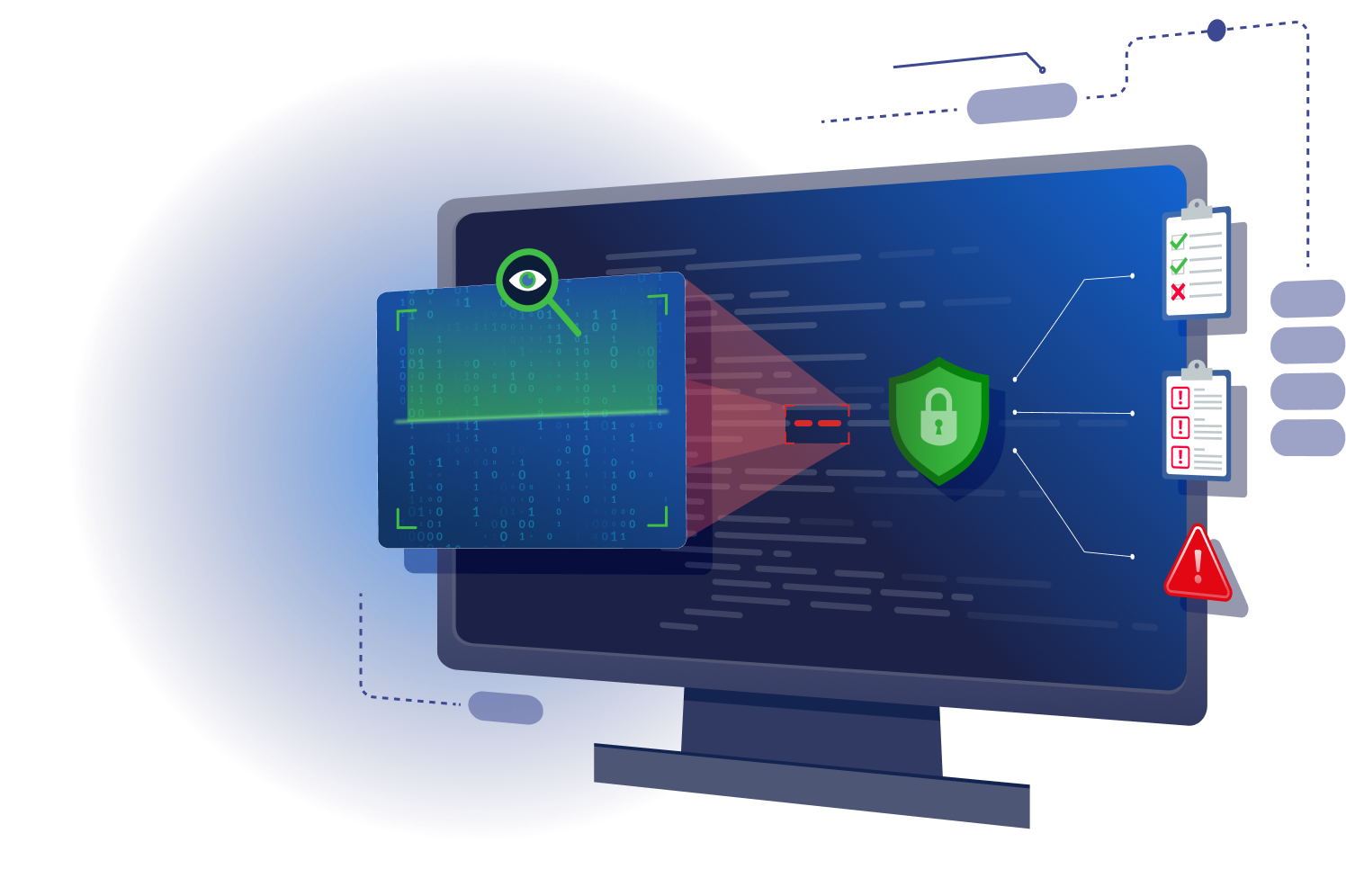
Code Snippets are a Risky Backdoor

Hidden Compliance Risks
Developers are increasingly using copied code. How do you ensure your application doesn’t violate any policies or create licensing issues while properly documenting all of it in an SBOM?
Undetected Insecure Code
You’re securing your application code and artifacts with traditional SAST and SCA, but what about risky copy-pasted, AI-generated code that these scanners don’t alert on?
Detect Altered, Partial, or
Repurposed Snippets
Here’s How JFrog Snippet Detection Benefits You
Run faster, more efficient scans
JFrog’s code analysis engine is lightweight and efficient in creating internal maps of your code’s logic and flow, keeping your development pipelines performing as expected.
Intelligently detect risky code snippets
JFrog uses proprietary semantic-matching techniques to discern a code snippet’s exact meaning and compares it against a database of public source code and associated risk data, offering stronger detection.
Automatically build detailed audit logs
JFrog adds code snippets directly to your SBOM to ensure a complete audit trail and that no hidden vulnerabilities jeopardize your security posture or license compliance.
Safeguard Valuable Intellectual Property
Protect your IP by catching instances of code copied from GPL-licensed components into your application code base. Neutralize the risk of your proprietary software becoming part of the open source.
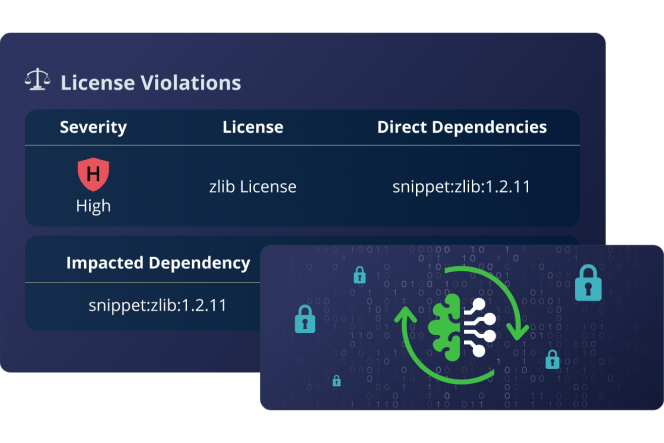
Keep Your Software Compliant
Discover the copied or AI-generated code snippets that present compliance issues and license violations. JFrog automatically documents these in detail within your SBOM, keeping you audit-ready and ensuring that hidden vulnerabilities don’t jeopardize compliance.
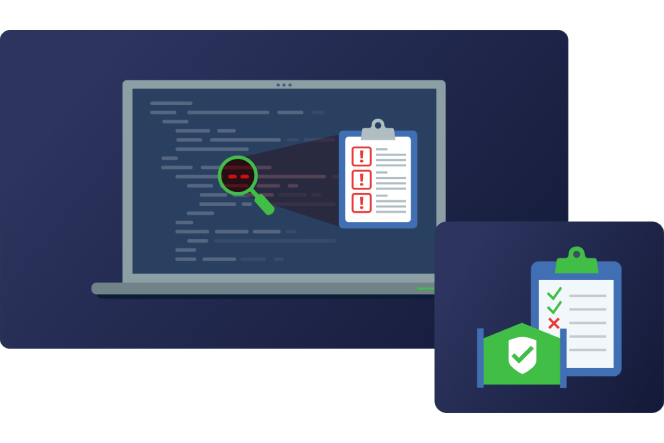
Mitigate Hidden
Code-based Risks
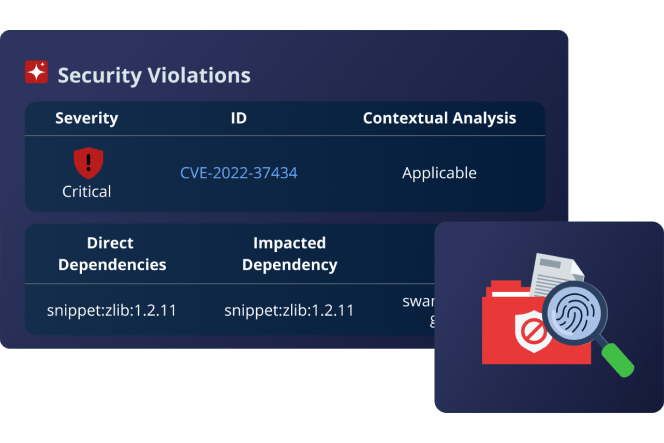
Snippets copied from repositories with known critical vulnerabilities often evade traditional SCA because they aren't formal packages. This creates an invisible backdoor in the organization. JFrog Code Snippet Detection flags these insecure snippets, allowing you to remediate them before they put your application at risk.
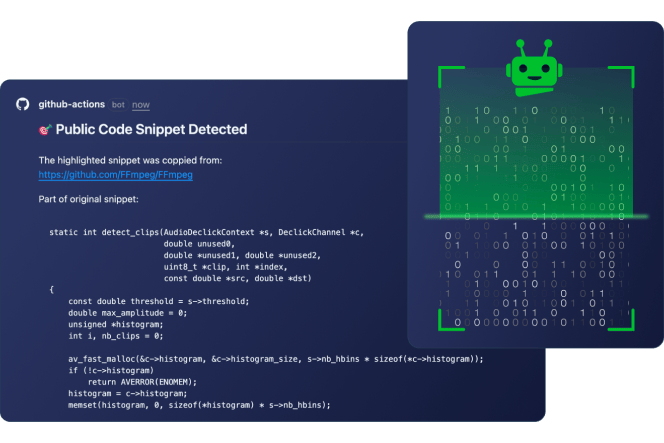
Use Frictionless Guardrails for Developers and Agents
Empower developers to use AI coding tools without restriction. Our automatic guardrails provide fast scans that won’t slow your pipelines, thanks to a low-cost computational analysis that avoids the performance bottlenecks typical of other solutions.
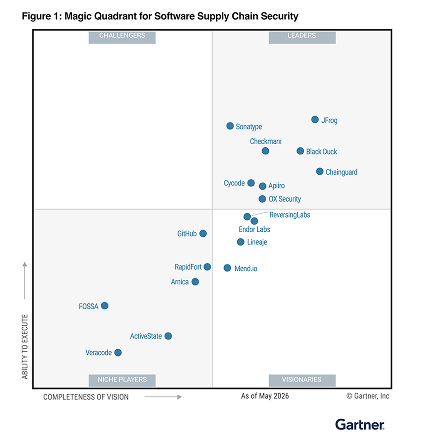
JFrog named a Leader in the
2026 Gartner® Magic QuadrantTM Software Supply Chain Security
Highest in Ability to Execute. Recognized for Vision and Execution in the software supply chain security market.
Additional Resources on Security
-
Software Composition Analysis (SCA) typically scans manifest files (like package.json or pom.xml) to identify full libraries. Code snippet detection goes deeper by analyzing the actual code to find small fragments—sometimes just a few lines—of third-party code. This is essential for identifying “copy-pasted” logic that wouldn’t show up in a dependency list but still carries legal and security obligations.
-
Generative AI tools, such as GitHub Co-Pilot, ChatGPT, and Claude Code, can occasionally suggest code fragments that mirror open-source projects under restrictive licenses. Snippet detection acts as a safety net for AI-assisted development by:
- Identifying the public occurrences of code that could be directly copied or used as reference by AI code generation tools.
- Flagging and blocking license incompatibilities before the code is committed.
- Ensuring your “AI-written” code doesn’t inadvertently introduce proprietary or copyleft risks.
-
Yes. JFrog’s snippet detection uses proprietary semantic matching techniques to understand the actual function of a snippet, rather than simple text matching. JFrog’s engine creates a unique signature of the code’s logic. This allows it to identify reused logic even if a developer has:
- Renamed variables or functions.
- Changed comments or formatting.
- Modified small portions of the logic while keeping the core algorithm intact.
-
Many open-source licenses require attribution, even for small functions. If a developer copies a 20-line utility function from a library, you might be legally bound by that library’s license. Snippet detection ensures your Software Bill of Materials (SBOM) is complete, capturing “hidden” dependencies that manifest-based scanners miss, thus protecting your company from intellectual property (IP) litigation.
-
AI-driven SAST tools like Anthropic Claude Code Security examine your codebase from the inside out, identifying structural vulnerabilities such as SQL injection or buffer overflows by analyzing logic and data flow. By contrast, snippet detection scans for code fragments matching known open-source libraries to flag licensing risks and inherited vulnerabilities. While SAST finds flaws you wrote, snippet detection finds risks you borrowed through “copy-pasted” code that often bypasses traditional SCA.