Claude
  Cursor
  Codex
Codex  Hugging Face
  NVIDIA
  Visual Studio Code
  Devin
Devin  Kiro
Kiro  Open Code
  NanoClaw
 Docker
  npm
npm  PyPy
PyPy  Wiz
Wiz 
 Finanzdienstleistungen
  Gaming
  Öffentlicher Sektor
  Automobil
  Technologie
  Gesundheitswesen


Common Questions About Smart Archiving and Automated Cleanup
Everything your team needs to evaluate JFrog as your artifact lifecycle governance solution.


JFrog prüft und härtet alles, was Ihre Agents nutzen, und steuert, wie sie bauen und deployen – jedes KI-Modell, jeden Agenten-Skill, jedes Plugin, jeden MCP-Server, jedes Paket und jedes KI-generierte Artefakt, verwaltet in einer Single Source of Truth.
Eine Agentic Workforce, der Sie vertrauen können.
Das ist AgentSecOps.
Die universelle und anpassungsfähige JFrog Plattform löst wesentliche branchenübergreifende Herausforderungen der agentischen Software-Lieferkette.
Beschleunigen Sie die Softwarebereitstellung unter Einhaltung strenger regulatorischer Standards wie HIPAA und FedRAMP
Build a continuous audit trail for CRA, DORA, NIST SSDF, and CERT-In compliance.


Meet compliance mandates, eliminate digital clutter, and keep systems performing with the JFrog Platform
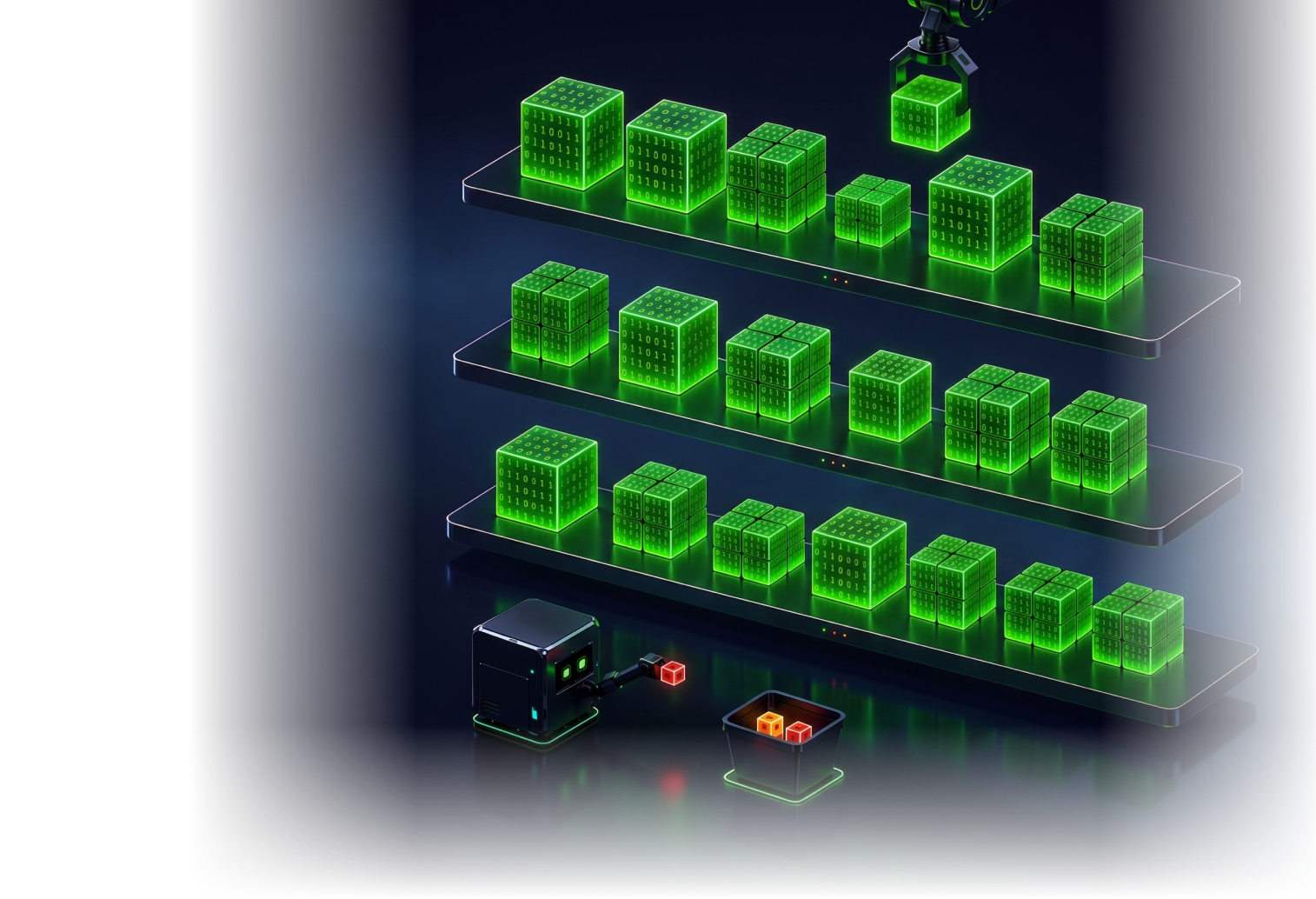
AI-driven development is filling repositories faster than ever. Leaving dormant, unpatched builds unmanaged across your storage environments inflates costs, slows down builds, and quietly expands your attack surface.
JFrog’s artifact retention and lifecycle governance solution automatically archives regulated releases for compliance and purges unneeded artifacts to keep repositories clean, costs low and audit-ready

Retain governed releases with the metadata, attestations, and evidence needed for regulatory audits.

Automatically archive legacy builds to immutable artifact storage to free up your primary space and cut overhead.

Purge unneeded artifacts to keep repositories lean, builds fast, and AI workflows running at full speed.
Proactively delete dormant assets containing known CVEs to keep your production environments risk-free.
Securely archive required assets for compliance and instantly purge the rest with JFrog.
Automated, policy-driven artifact archiving moves required releases into governed, long-term optimized storage while preserving full context needed for audit, compliance, and restoration.
 Complies with SOX, ISO, HIPAA, GDPR, and PCI DSS.Retains binaries, metadata, permissions, and attestations.Control what gets archived with artifact retention policies.One‑click search and restore.Deploys anywhere: SaaS, hybrid, or self-hosted.
Automatically remove unneeded artifacts to keep your system of record clean, fast, and secure.
Define artifactory cleanup policies by age, usage, version, or project.Apply cleanup policies across repositories platform-wide, not one repo at a time.Preview impact with dry-run simulation mode.Cut active storage costs and admin overhead.Purge dormant, unpatched assets to eliminate risk.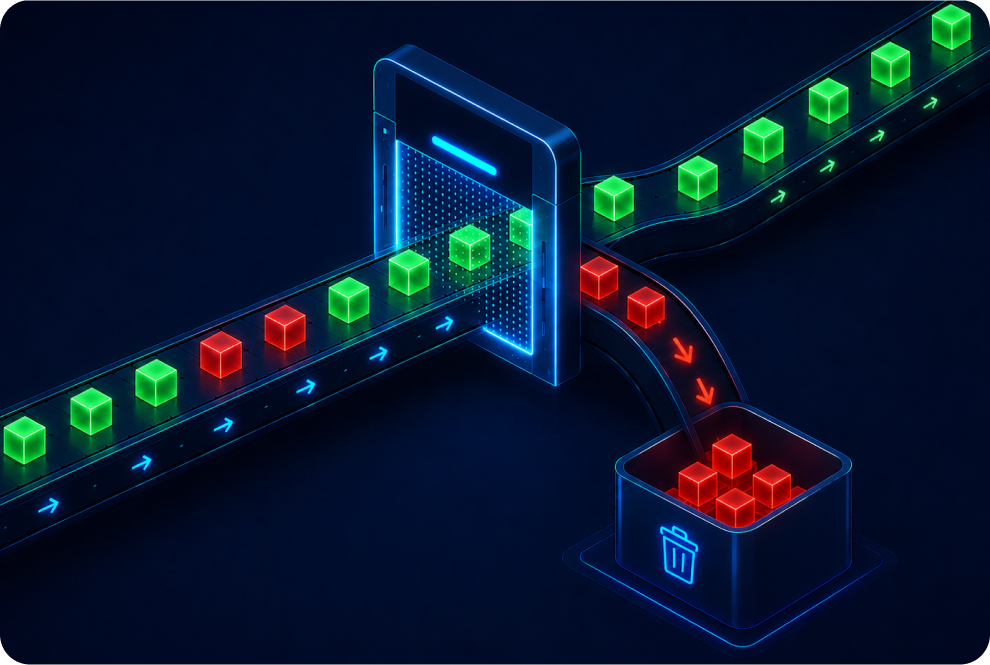

It's an excellent solution, and it's exactly what we were looking for from a compliance standpoint, but also from a cost standpoint.
Everything your team needs to evaluate JFrog as your artifact lifecycle governance solution.
JFrog Smart Archiving moves legacy artifacts you are required to retain (such as production releases subject to regulatory mandates) to governed, low-cost, immutable artifact storage, preserving full metadata, attestations, and build evidence for audit and restoration.
JFrog Automated Cleanup permanently removes artifacts that are no longer needed and have no retention requirement. Together, they give you a complete binary lifecycle management strategy: retain what you need, eliminate what you don’t.
Smart Archiving is designed to support long-term binary retention requirements across a range of regulatory frameworks including SOX, ISO, HIPAA, GDPR, and PCI DSS. Retained artifacts are stored with their full provenance, including metadata, permissions, and build attestations so you can demonstrate a complete, auditable chain of custody at any time.
Cloud storage lifecycle policies move binary blobs, but leave metadata and database entries behind in your operational instance. JFrog Smart Archiving moves the full artifact and its complete context: binaries, metadata, permissions, and attestations. The result is an operational instance that stays lean and performant, and an archive that is fully searchable and restorable in one click, with zero reconstruction effort.
Yes. Every artifact archived by Smart Archiving remains searchable within the JFrog Platform and can be restored to your operational Artifactory instance in a single click with its complete metadata, permissions, and build context fully intact. There is no manual reconstruction required.
Artifactory cleanup policies are configured by platform or project administrators based on criteria including artifact age, usage, version condition, package type, and project. Policies can be previewed in dry-run mode before execution, so you can see exactly what will be removed before any action is taken. Once activated, policies run automatically on a schedule or when criteria are met, with full audit logs of every action taken.
Yes. By default, removed artifacts are safely held in a global trash can for a configurable retention period set by the platform administrator, allowing files deleted by accident to be recovered. However, policies can be optionally configured to bypass the trash can for immediate deletion. Once the configured retention period expires or the trash can is bypassed, the files are permanently deleted and cannot be restored.
Smart Archiving is available for JFrog Enterprise and Enterprise+ customers. It is natively managed within your existing JFrog instance. No additional infrastructure, third-party integrations, or internal tooling is required.