Claude
  Cursor
  Codex
Codex  Hugging Face
  NVIDIA
  Visual Studio Code
  Devin
Devin  Kiro
Kiro  Open Code
  NanoClaw
 Docker
  npm
npm  PyPy
PyPy  Wiz
Wiz 
 Financial Services
  Gaming
  Public Sector
  Automotive
  Technology
  Healthcare


Why Enterprise and Fortune 500 Companies are Leaving Snyk and Checkmarx for JFrog
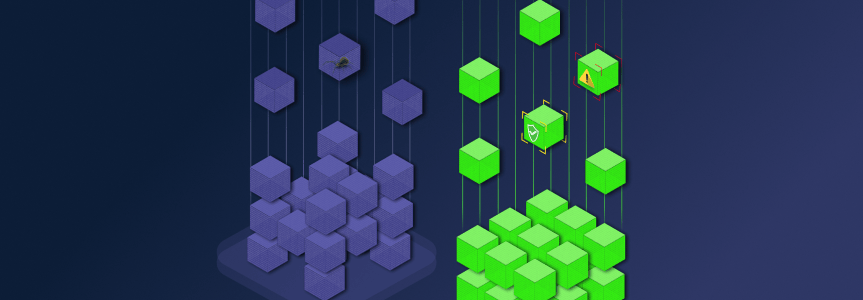
Effectively protecting your software supply chain has reached a critical turning point where the traditional strategy of integrating “best of breed” or point AppSec solutions is no longer sustainable.
While tools like Snyk and Checkmarx served a purpose in the era of siloed development and security, today we’re seeing how leading companies are moving away from “bolted-on” security scanners in favor of comprehensive software supply chain platforms that offer end-to-end visibility, security and control. This blog explores the three primary reasons behind this strategic shift, illustrated by the real-world experiences of top companies.
What are Real World Examples of Snyk and Checkmarx Customers Moving to the JFrog Platform?
Here are a few examples of companies that moved to JFrog after finding their enterprise Application Security requirements were not being met by Snyk and Checkmarx:
1. Security Integrated into the Artifact Management Solution
The most common frustration with point solutions is that they create “tool sprawl” and silos between DevOps and security teams. JFrog eliminates this by unifying artifact management and security into a single system of record. With JFrog Artifactory as your single source of truth for artifact management, JFrog Application Security solutions are a native part of the pipeline rather than a separate, friction-heavy process: SAST, SCA, IaC, Secret scanning, Runtime Security, AI/ML security and more – are all streamlined in one DevSecOps platform.
Customer – An American top 10 Fortune 500 company, decided to replace Snyk’s point solutions with JFrog’s end-to-end software supply chain platform
Pain Point – The primary trigger for moving from Snyk to JFrog Xray was tool consolidation. The company recognized an opportunity to reduce “tool sprawl” and costs by leveraging JFrog Artifactory which was already a trusted integral part of their development operations.
Solution – By enforcing AppSec directly within their existing software supply chain management solution, the company was able to scan, detect and remediate security risks efficiently. This resulted in the company streamlining their delivery without compromising on their security requirements.
Key Requirements and Wins – The company compared JFrog Xray to Snyk, focusing on positive developer experience. They found several JFrog Xray features superior to Snyk, specifically its granular and flexible policy management. They were also extremely impressed by Xray’s scanning performance and found its IDE integration, JFrog CLI, and Git integration to be equal to or better than Snyk’s offerings.
Outcome – After a successful two-week POC, the company decided to completely decommission Snyk and roll out JFrog Xray. This transition highlighted that consolidating security with JFrog Artifactory’s system of record fortifies their security posture in a way that “best of breed” tools are not able to do.
2. Full Coverage: Scanning Both Source Code and Binaries
Relying solely on source code scanning, the primary focus of Snyk and Checkmarx, creates a massive “security blind spot”. Source code represents the intent, but the binary is the reality: Attackers often exploit vulnerabilities introduced after the code is compiled. JFrog provides end-to-end coverage by scanning both source code and the final compiled binaries that you actually ship to production.
Customer – An American organization operating in the federal industry chose JFrog Curation and JFrog Advanced Security over Checkmarx.
Pain Point – The organization was frustrated with the siloed experience they were having with Checkmarx, where DevOps and Security were not in sync. They required a more integrated solution for their software supply chain to consolidate and ensure full alignment between the DevOps and Security teams.
Key Requirements and Wins – Because they operate in the federal sector, the organization had to meet specific attestation requirements for improving open-source software security and complying with industry regulations. The decision to switch was made easier because the JFrog Platform offered essential features they needed, and were lacking, such as Docker scanning support, secrets detection (in both source and binary code), and Infrastructure as Code (IaC) scanning. Another critical factor was their need for a cloud-agnostic solution that could support their specific environment, which included GitHub.
Outcome – With the JFrog security solutions fully integrated within their software supply chain, the organization was able to achieve end-to-end supply chain security while maintaining speed and quality of delivery. JFrog Curation shifts their security “lefter than left” by blocking risky third-party software (packages, IDE extensions, models, and more) from ever reaching their SDLC, while JFrog SAST, SCA, IaC, and secret scanners ensure their application security requirements are met throughout their pipelines, code to production, without impeding delivery.
3. Eliminating False Positive “Noise”
Traditional point solutions frequently flood developers with thousands of alerts, most of which are false positives because the vulnerability is unreachable or non-exploitable in the actual application context. JFrog uses contextual, and transitive contextual analysis to look beyond the code and analyze the binary, container, and configuration context. This allows teams to ignore the “noise” and focus their finite resources on the 10% of vulnerabilities that actually pose a threat.
Customer – An American Healthcare company, subsidiary of a Fortune 10 company, chose JFrog over Snyk and Sonatype
Pain Point – The company was “really frustrated” with Snyk’s “bolted on” security. They prioritized replacing it as quickly as possible, even assigning a dedicated engineer to the task.
Solution – The company decided to move from a fragmented environment using Snyk for security, Sonatype Nexus for artifact management, and GitHub for code to a consolidated JFrog environment utilizing JFrog Artifactory, JFrog Xray, JFrog Advanced Security, and JFrog Curation.
Key Requirements and Wins – The company’s move was heavily motivated by the need to reduce false positives, which they suffered from with Snyk and its inaccurate heuristic applicability analysis. . They were also interested in Docker scanning and release lifecycle management, capabilities that JFrog provides.
Outcome – By moving to the JFrog Platform, the company aimed to streamline its processes and eliminate the “noise” of inaccurate vulnerability alerts. Thanks to JFrog’s contextual analysis capabilities (part of JFrog Advanced Security), the company was able to drastically improve its false positive rate. By leveraging JFrog’s integrated approach, with security built into their artifact management system, the company now enjoys better alignment between DevOps and Security practices.
Why Enterprise and Fortune 500 Companies Move to the JFrog Platform
Platform architecture is a must-have to meet today’s Application Security challenges.
Leading companies are moving to JFrog because they recognize that security is an enabler of increased release velocity when it is integrated, not bolted on. By consolidating onto a single platform, organizations like those mentioned above have turned their security posture from a fragmented series of checks into a streamlined, automated, and trustworthy supply chain.
Want to see for yourself? Schedule a demo, or take an online tour today!
 New insights from +1,400 security & DevOps leaders. Get the Full Report.