Block Malicious Packages Before They Enter Your Software Supply Chain
Every package, AI model, and IDE extension vetted at the gate. Safe alternatives delivered automatically. Builds never break.
What is JFrog Curation?
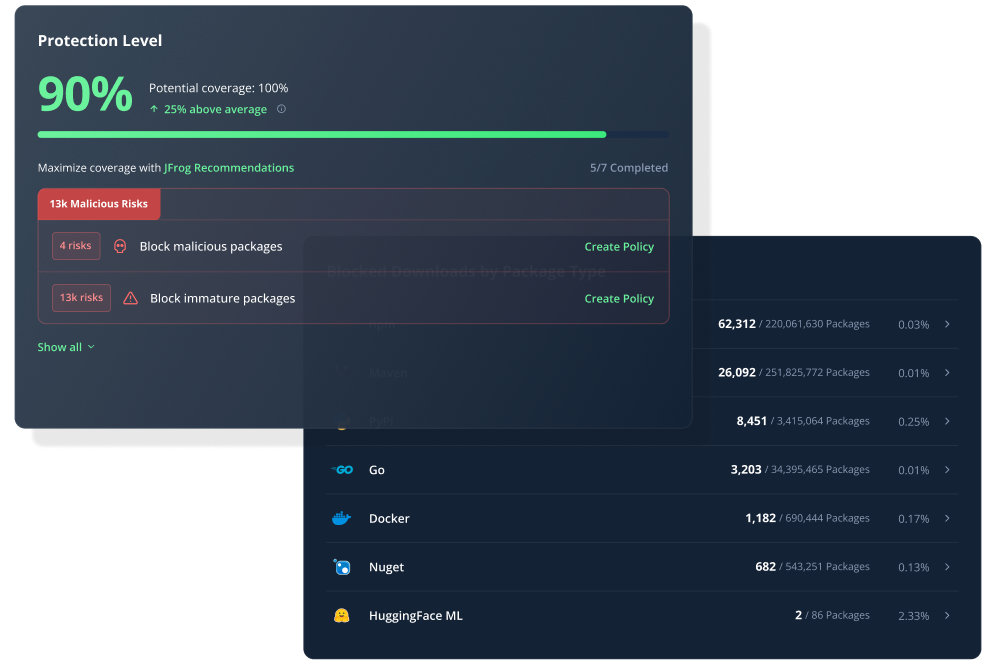
JFrog Curation automatically stops risky open-source packages, AI models, IDE extensions, and other third-party components before they ever reach your developers. Every component is vetted automatically, enforcing your security, compliance, and operational policies across every team, site, and region. When a component violates policy, JFrog automatically delivers the next safe, compliant version instead. Developers keep building. Security teams stop fighting fires.
Block Threats Before They're Reported
Attackers inject malicious code into popular packages or hijack them entirely. Standard scanners only catch what's already been reported. JFrog's research team flags malicious packages before they appear in public databases. A configurable immaturity policy holds new versions for a set period, closing the window attackers exploit. Latest threats uncovered by JFrog Security Research
Developers Always get a Safe Component
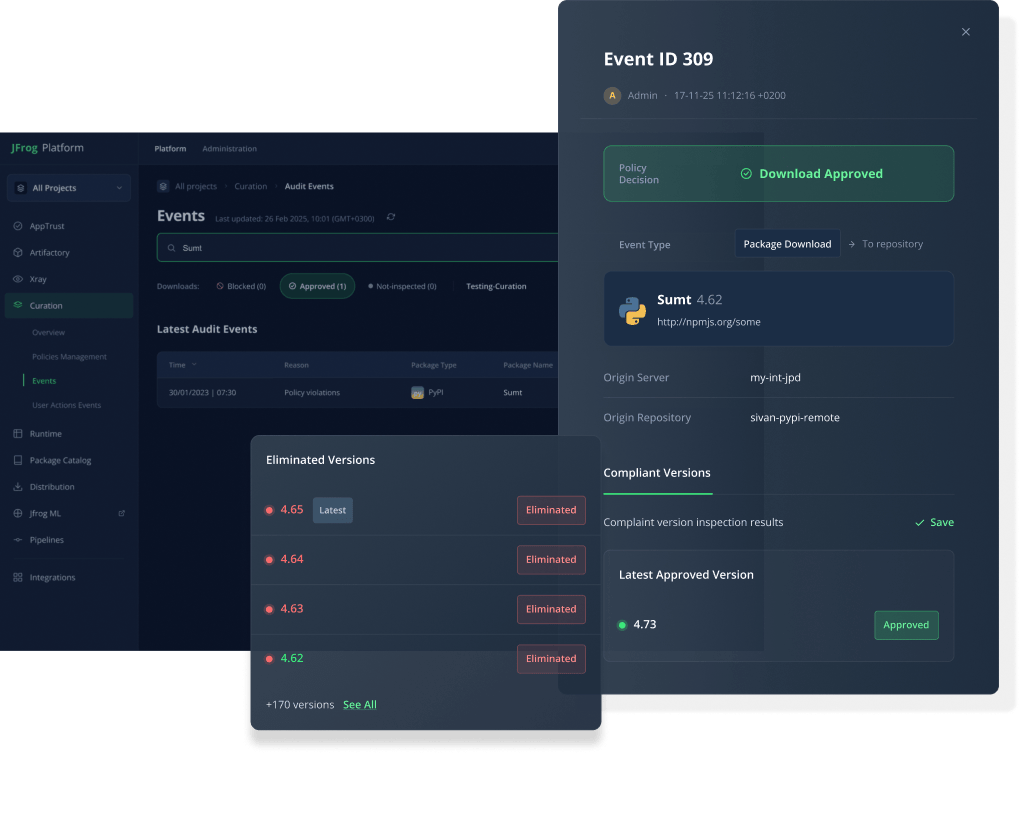
When a component violates policy, JFrog Curation automatically delivers the next compliant version instead, preserving the developer experience where builds continue and teams never stop working. Compliant Version Selection is a capability unique to JFrog.
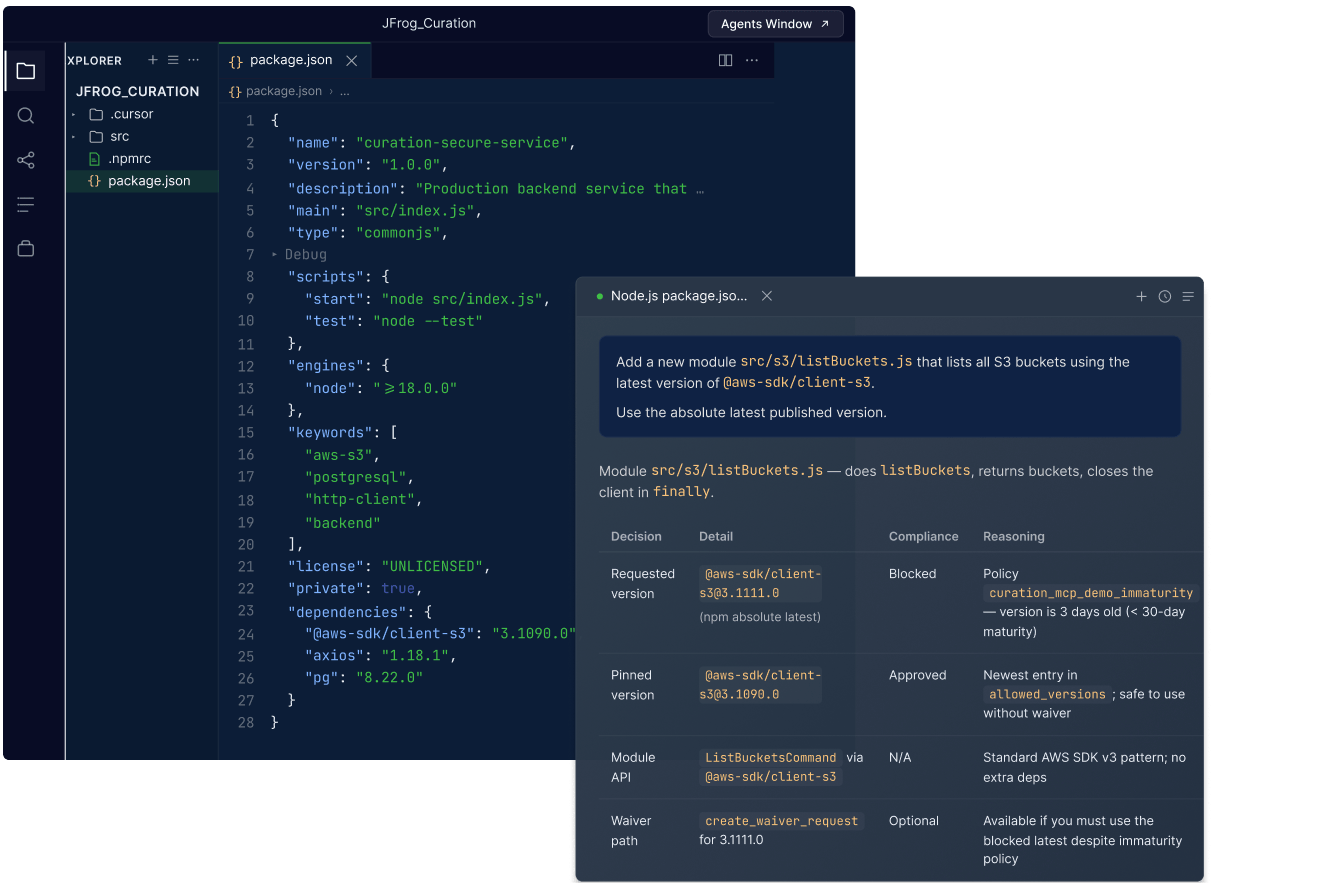
As AI agents take on more of the coding workflow, JFrog Curation governs package selection for agentic workflows too, ensuring every component an AI agent requests meets your policies automatically.
Complete visibility from a Single Dashboard
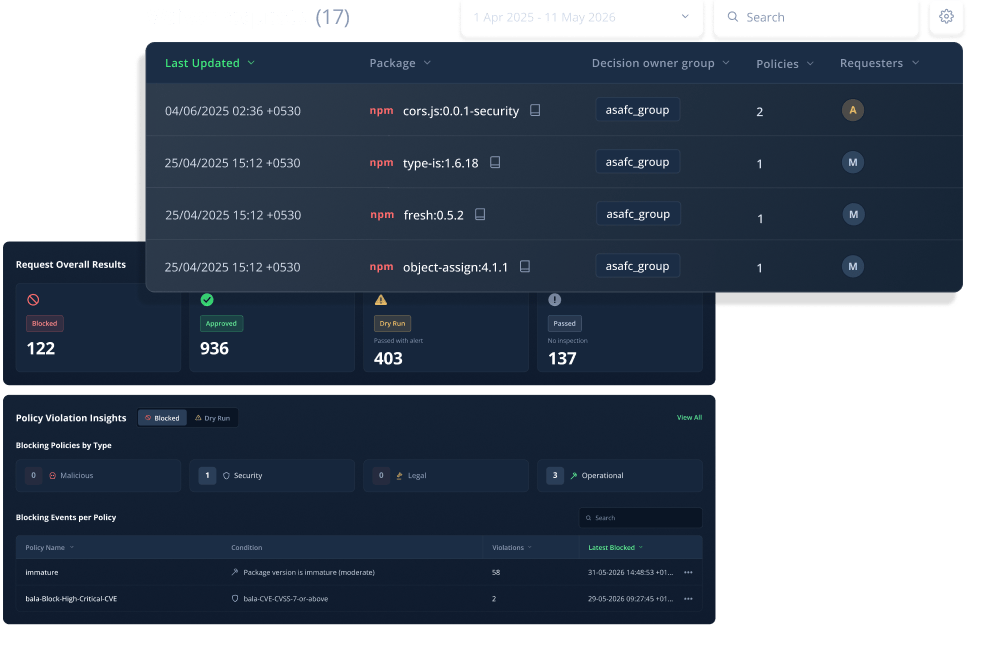
Every open-source component your teams request, whether blocked, approved, or waived, is visible in real time from a single centralized dashboard, across every team and repository.
Global Enforcement, Zero Gaps
Security, compliance and operational policies are enforced at the point of request, across every site and region. When developers or AI agents bypass Artifactory and pull directly from public registries, Package Traffic Controller automatically intercepts and reroutes that traffic through JFrog, working alongside your existing network security controls to ensure no package request goes ungoverned. When a blocked component is genuinely needed, developers can request a waiver directly, without raising a security ticket. Every decision is logged automatically as immutable evidence.
Proven at Enterprise Scale
Deliver measurable business impact with automated upstream package governance that blocks threats instantly.
Global Enterprises Trust JFrog Curation to Make Open Source Consumption Safe by Default
“JFrog Curation is a firewall for open-source packages. It's about how we can help developers continue their work without disrupting their workflow. We enable development, we don't block it."
"With JFrog Curation and Xray, we have a genuine firewall for our dependencies. Developers can pull what they need, but every package has already been audited, verified, and cleared before they ever touch it. Security becomes a property of the environment, not a step they have to remember."
“Adding JFrog Curation and Advanced Security to our pipelines allowed us to enhance our security throughout the lifecycle of our products.”
“With JFrog Curation, we're truly shifting left because we're now able to block malicious packages and risky components before they even enter our cloud instance, easing the minds of our security leadership team.”
“Our Curation deployment provides very effective and efficient supply chain protection. We were able to shut down recent provider attacks in mere minutes once discovered and the control has proven 100% successful since.”
JFrog named a Leader in the
2026 Gartner® Magic QuadrantTM Software Supply Chain Security
-
Why is software composition analysis (SCA) not enough to stop supply chain attacks?
SCA tools were built for a different threat. They catch known vulnerabilities by matching components against CVE databases, but supply chain attackers inject malicious code into legitimate packages that have no CVE and no vulnerability history. To an SCA tool, intentionally malicious code looks clean because it isn’t on any list. Effective supply chain security requires governing components before they enter your environment, not scanning after they’re already inside. JFrog Curation identifies malicious packages faster than public databases are updated and holds newly published package versions for 14 days to close the window attackers exploit.
-
How does JFrog Curation help organizations comply with Executive Order 14028 / EU Cyber Resilience Act?
Both frameworks require organizations to verify the security of open source components before integration, not after. Executive Order 14028 mandates secure software development practices including the generation of a Software Bill of Materials (SBOM) to provide full visibility into components used. The EU Cyber Resilience Act requires malicious software prevention and due diligence on third-party components before integration, alongside ongoing vulnerability management across the product lifecycle. JFrog Curation enforces automated policy verification at the moment a developer requests a component and generates an immutable audit trail of every request, block, and approval. This provides the documented evidence both frameworks require.
-
How do you secure open source AI models before using them in production?
Applying comprehensive open-source AI model governance, JFrog Curation extends the same automated policy enforcement to AI models from Hugging Face and NVIDIA NIM as it does to standard packages. It evaluates every model against your security and compliance policies before it enters your environment. With coverage across 97.1% of Hugging Face models, organizations can adopt AI without compromising their supply chain integrity.
-
How do you block malicious open source packages before they enter the build pipeline?
Jfrog Curation intercepts and evaluates every component the moment they are requested, before being downloaded. Curation does this automatically, enforcing your security, compliance, and operational policies at the entry point of your supply chain and delivering a safe, compliant alternative where one exists. For unknown threats, the immaturity policy holds new package versions for 145 days, buying time until a poisoned package is publicly flagged.
-
How does JFrog Curation detect malicious packages that have not been flagged in public vulnerability databases?
JFrog’s dedicated security research team identifies and flags malicious packages faster than public databases are updated, protecting your organization before the wider community is aware of the threat. The JFrog Catalog continuously analyzes package metadata, behavior, and provenance across 15 million+ components making manual tracking unnecessary. For threats not yet discovered, the immaturity policy provides a structural defense by blocking new package versions for 14 days, closing the window before attackers can exploit them.
-
What happens when a developer needs a blocked package?
When JFrog Curation blocks a component, your build doesn’t break. Where a safe, compliant version exists, Curation automatically delivers it. If no compliant version is available,you can request a waiver directly from your workflow without raising a security ticket. Every waiver request is logged automatically, so the security team has full visibility without becoming a bottleneck.