Claude
  Cursor
  Codex
Codex  Hugging Face
  NVIDIA
  Visual Studio Code
  Devin
Devin  Kiro
Kiro  Open Code
  NanoClaw
 Docker
  npm
npm  PyPy
PyPy  Wiz
Wiz 
 Services financiers
  Jeux vidéo
  Secteur public
  Automobile
  Technologie
  Soins de santé



Chaque version, entièrement gouvernée. Automatiquement.
Appliquez nativement des points de contrôle des politiques tout au long de votre SDLC. Bloquez les versions non conformes grâce à des preuves de sécurité, de qualité et de conformité. Faites confiance aux logiciels écrits par des humains et par l’IA.

La gouvernance manuelle ne peut pas survivre au développement piloté par l’IA.
Le goulot d'étranglement de la gouvernance
L’IA génère désormais 10 ois plus de code que les équipes humaines ne peuvent en examiner manuellement, tandis que les audits restent à un rythme humain. La gouvernance est la nouvelle contrainte.

Détection, sans application
Les outils de sécurité signalent les risques, mais veillent rarement à leur application. Sans Policy-as-Code intégrée au pipeline, la gouvernance reste confinée aux tableaux de bord tandis que des versions non conformes parviennent en production.

Enjeux croissants de conformité
Avec des réglementations telles que le Cyber Resilience Act de l’UE, qui prévoient des amendes pouvant atteindre 2,5 % du chiffre d’affaires mondial, prouver la conformité est devenu une exigence au niveau du conseil d’administration, et pas seulement un obstacle réglementaire.
Le poids de la conformité est bien réel.

« Nous avons 100 équipes qui fournissent chaque mois des preuves de conformité manuelles, 12 fois
par an. Cela me prend plusieurs heures de ma journée, chaque mois, rien que pour examiner ce qu’elles
soumettent. »
« Je ne fais pas confiance aux développeurs qui remplissent des questionnaires de conformité une fois par an.
Je veux voir des données. »
« Aujourd’hui, le processus consiste pour moi à m’asseoir devant 10 pages d’une feuille de calcul Excel et à répondre à chaque question de conformité. »
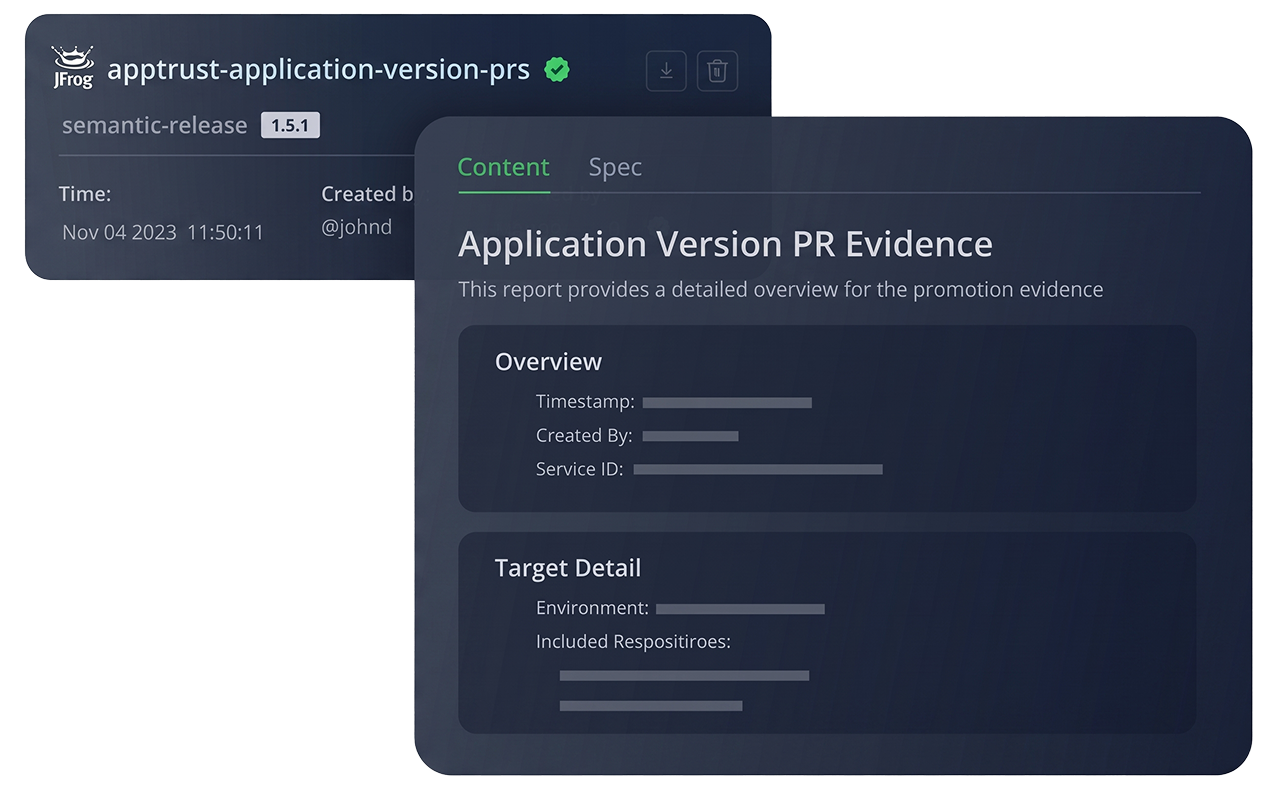
Chaque version comporte une preuve immuable
applique des points de contrôle des politiques, cartographie la propriété, et offre une traçabilité prête pour l’audit, automatiquement.
NOUVEAUTraçabilité du prompt à la mise en production
Chaque prompt d’agent, commit, PR, approbation, ticket Jira et SBOM est automatiquement signé et lié à l’artefact logiciel. Pas de captures d’écran ni de feuilles de calcul. Chaque élément de preuve est scellé de manière cryptographique, du prompt à la production.
Des barrières qui bloquent physiquement les versions non conformes
Les points de contrôle Policy-as-Code évaluent les preuves à chaque promotion, bloquant ainsi les versions non conformes. Celles qui réussissent obtiennent le badge de version fiable. Les exceptions justifiées sont suivies sous forme de dérogations, afin que la gouvernance ne ralentisse jamais la vitesse d’exécution des développeurs.
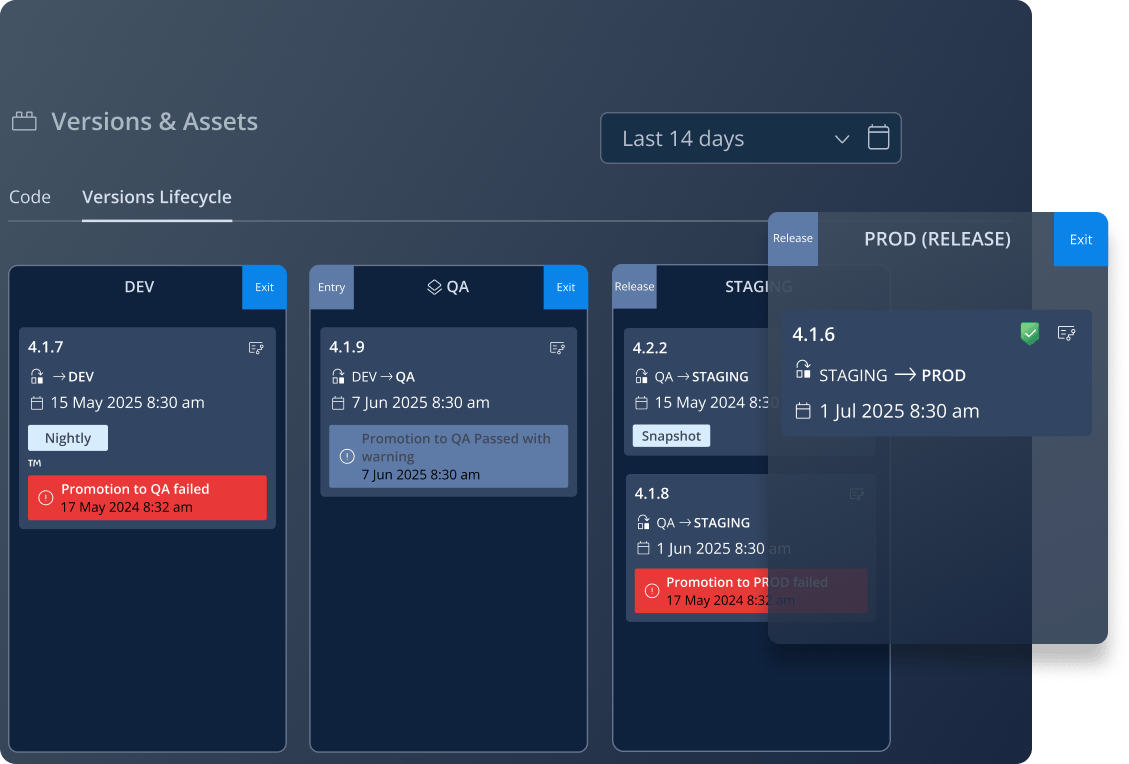
NOUVEAUGouvernance continue, et non ponctuelle
La gouvernance ne s’arrête pas lorsqu’une version est déployée. Chaque application est associée à un propriétaire et à un niveau de criticité, de sorte que le risque a toujours un contexte. Chaque version active en production fait l’objet d’une surveillance continue après son déploiement. Les versions expirées ne font plus l’objet d’une gouvernance active.
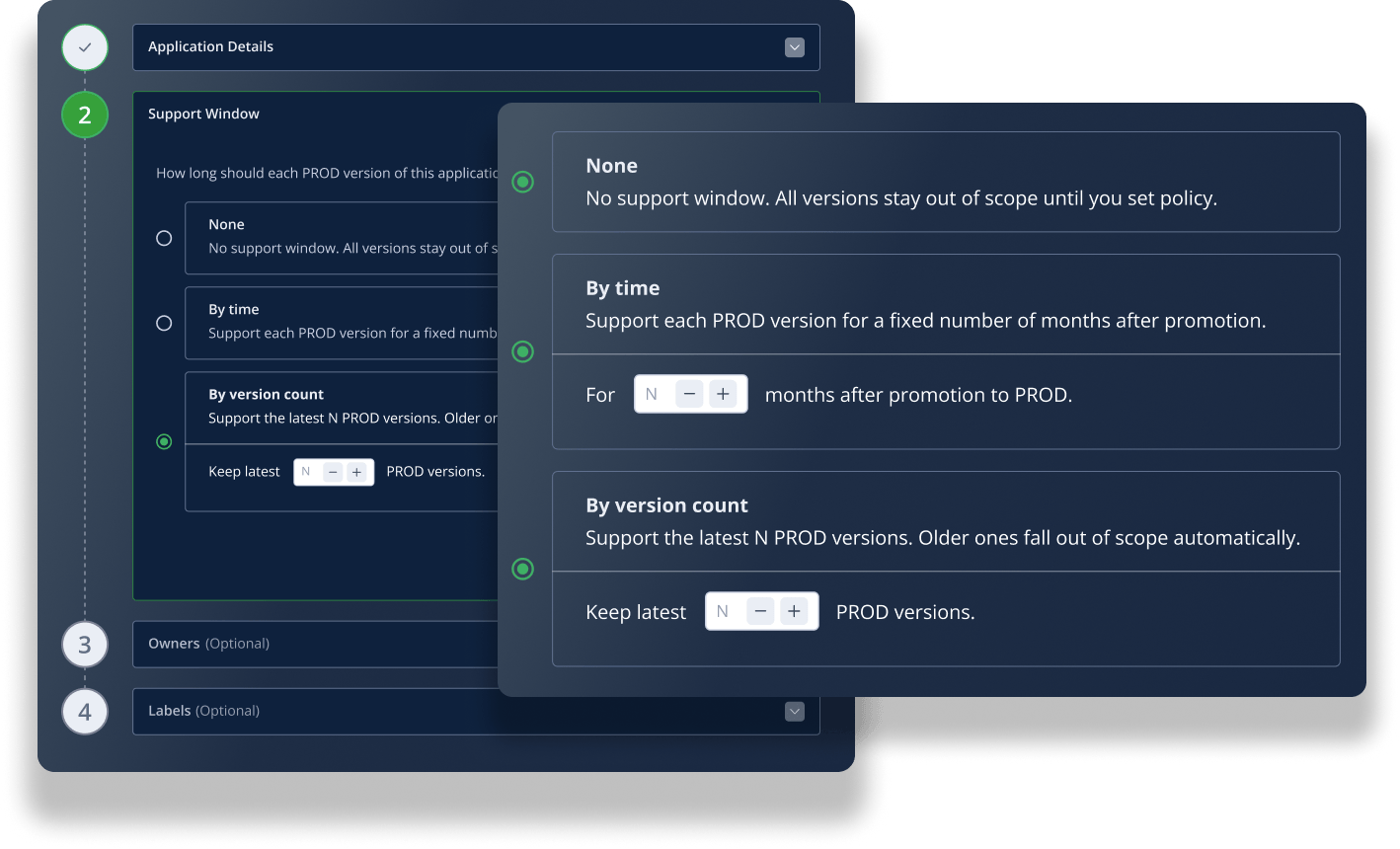
Prêt pour l’audit par défaut
Lorsque les autorités de réglementation demandent ce qui a été livré, pourquoi cela a été approuvé, et ce qui a été signalé puis exempté, toutes les réponses sont déjà là.
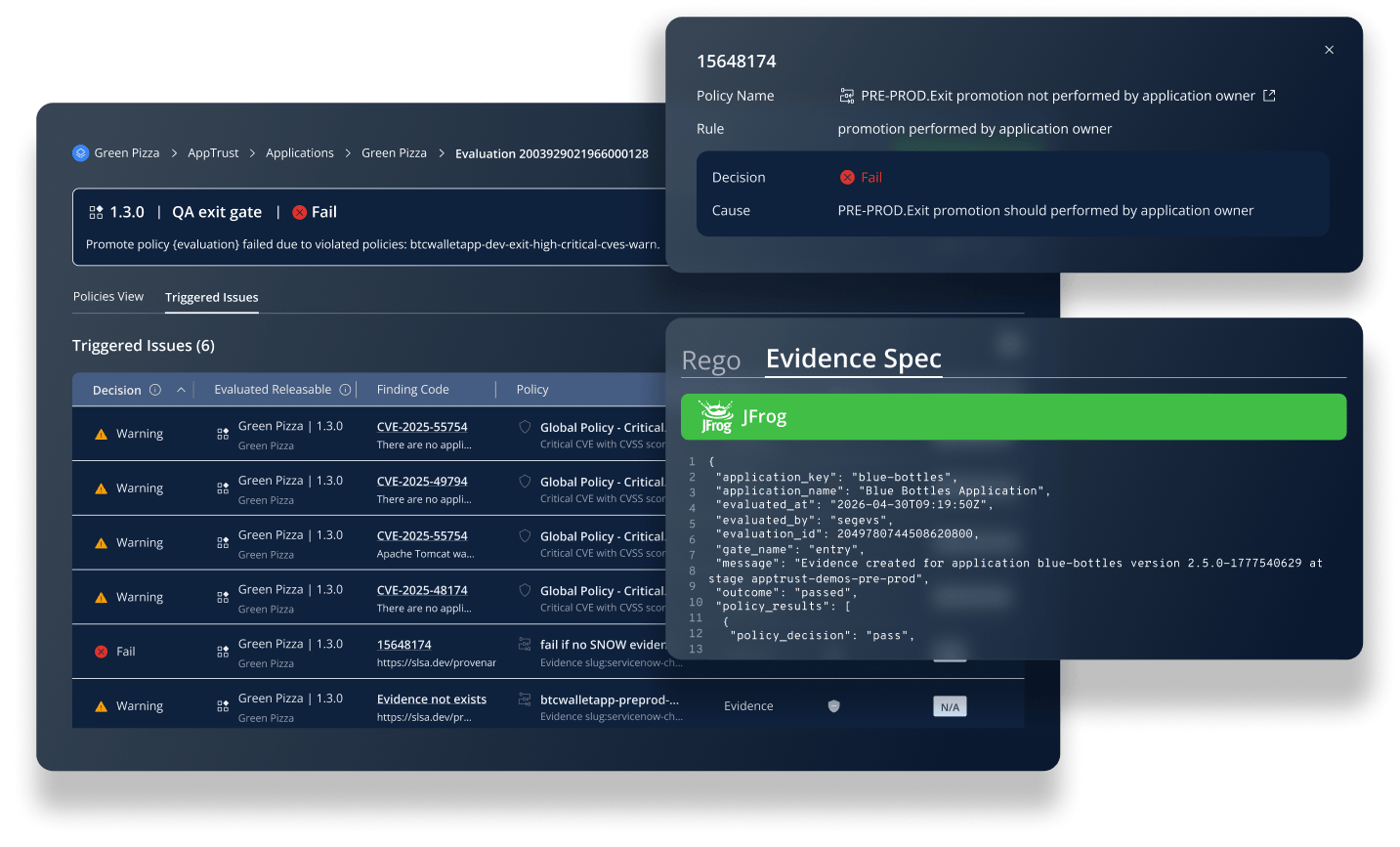
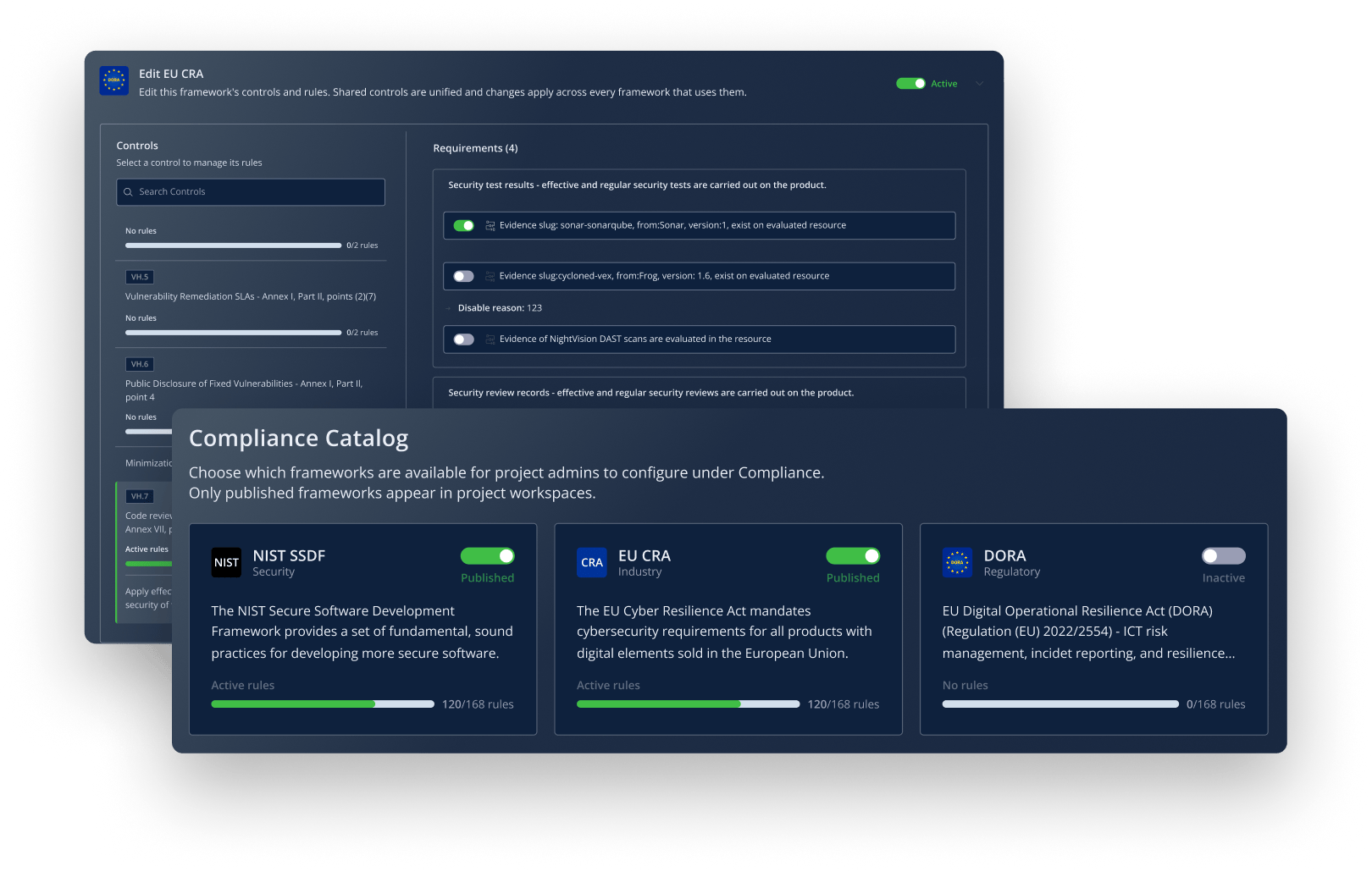
NOUVEAUConformité au CRA et au NIST SSDF, intégrée à votre pipeline
Appliquez des cadres de conformité pré-mappés sous forme de Policy-as-Code, sans aucune rédaction manuelle de politiques requise. Chaque contrôle est mappé et appliqué automatiquement. Évaluation de la couverture en temps réel pour savoir exactement où vous en êtes.
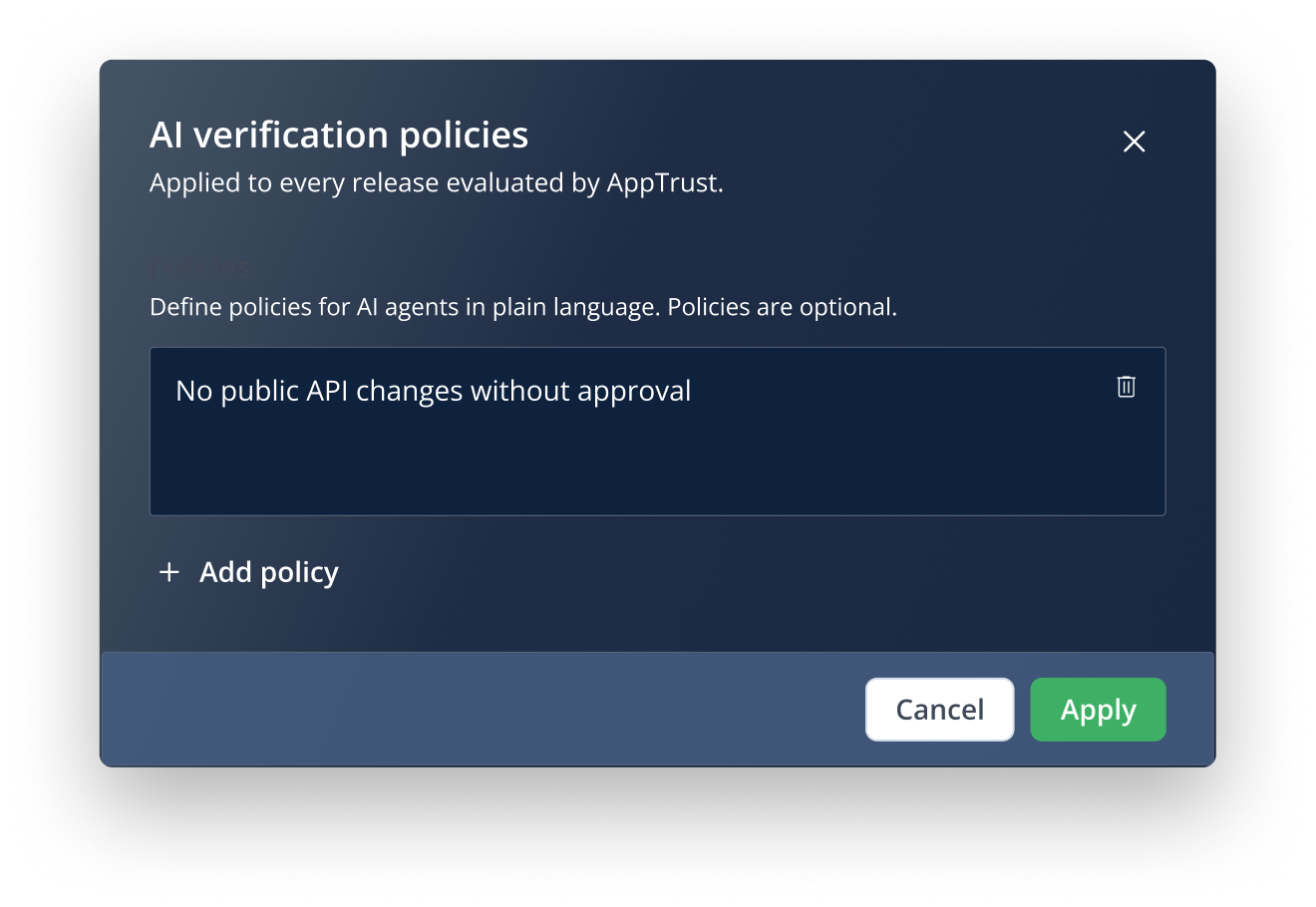
NEWEnforce Release Intent with AI Verification Policies
Syntax checks confirm code compiles, but they miss drift from defined requirements. AppTrust uses AI to evaluate releases against plain-language policies, generating signed cryptographic proof that execution matches intent.
DevGovOps à chaque étape
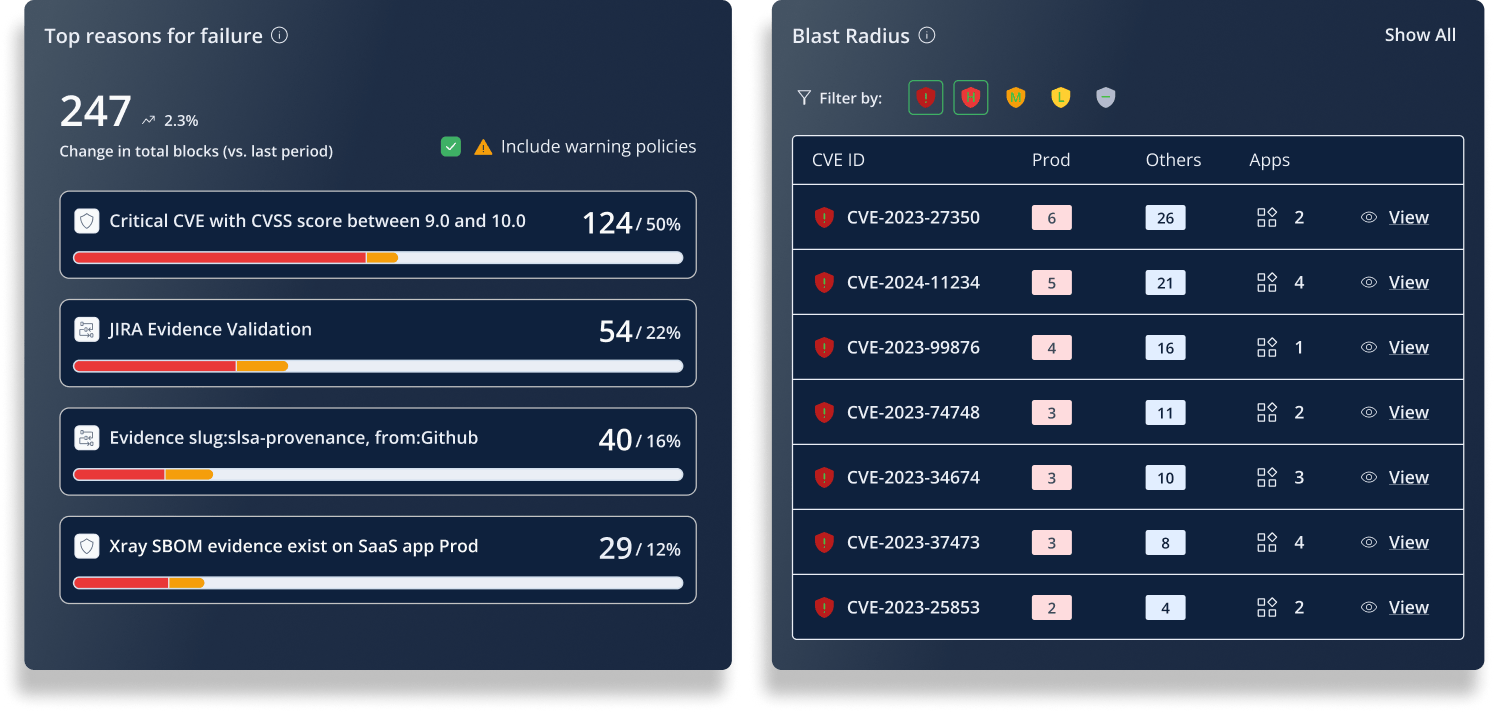
De la CVE au propriétaire en un seul écran
- Lorsqu’une CVE apparaît après la publication : chaque version fiable contenant le composant concerné est automatiquement signalée.
- Visibilité instantanée du rayon d’impact : visualisez le propriétaire, le niveau de criticité et l’étape de publication de chaque application concernée sur un seul écran.
- Hiérarchisez en fonction de l’impact, et non du score CVSS : une CVE critique sur une application sandbox peut attendre, contrairement à une CVE moyenne sur une version destinée aux clients.
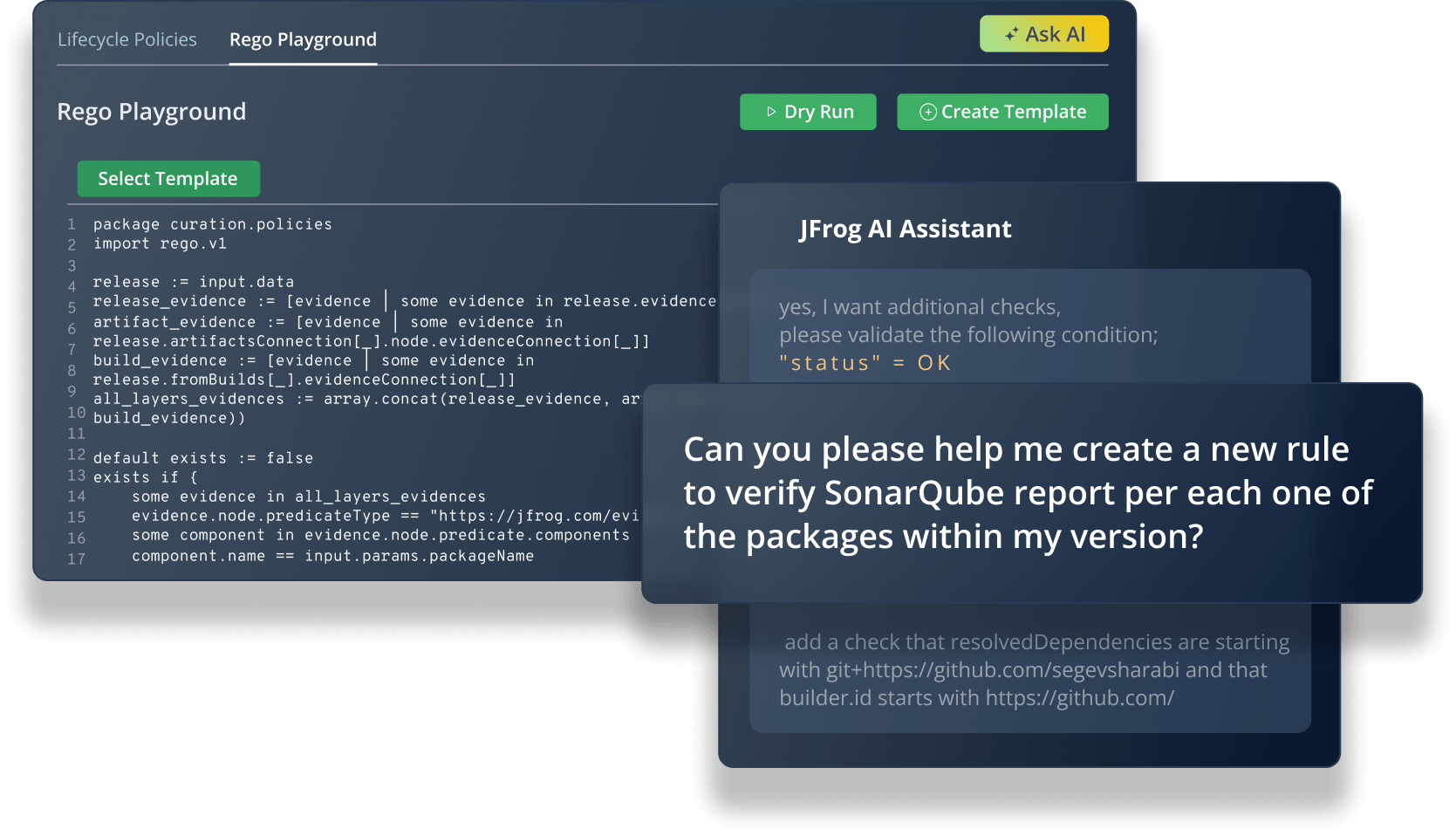
Policy-as-Code, à n’importe quelle échelle
- Espace de test des politiques : testez de nouvelles politiques sur de véritables versions d’application issues de votre système d’enregistrement avant qu’elles ne bloquent un build.
- Création assistée par l’IA : décrivez ce que vous souhaitez appliquer, et notre assistant IA génère du Rego validé pour le contexte de votre application en quelques secondes.
- Modèles réutilisables : validez une seule fois, enregistrez sous forme de modèle et permettez à toute équipe de votre organisation de l’adopter instantanément.
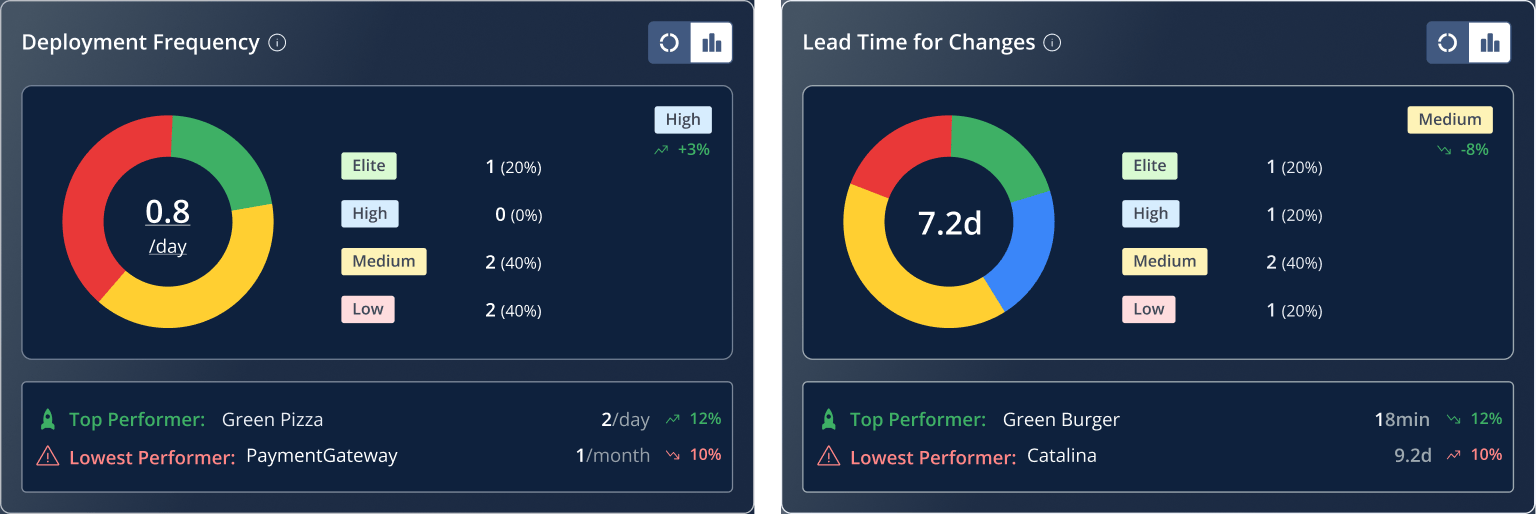
Suivez les métriques de livraison DORA.
- Fréquence de déploiement : mesurez à quelle fréquence chaque version de projet ou d’application est livrée, par équipe.
- Visibilité des délais : visualisez précisément à quel stade les versions ralentissent, par étape de promotion.
- Performances des équipes : Comparez la vitesse de déploiement dans l’ensemble de votre portefeuille et identifiez les équipes qui avancent rapidement et celles qui doivent être débloquées.